
The gesture
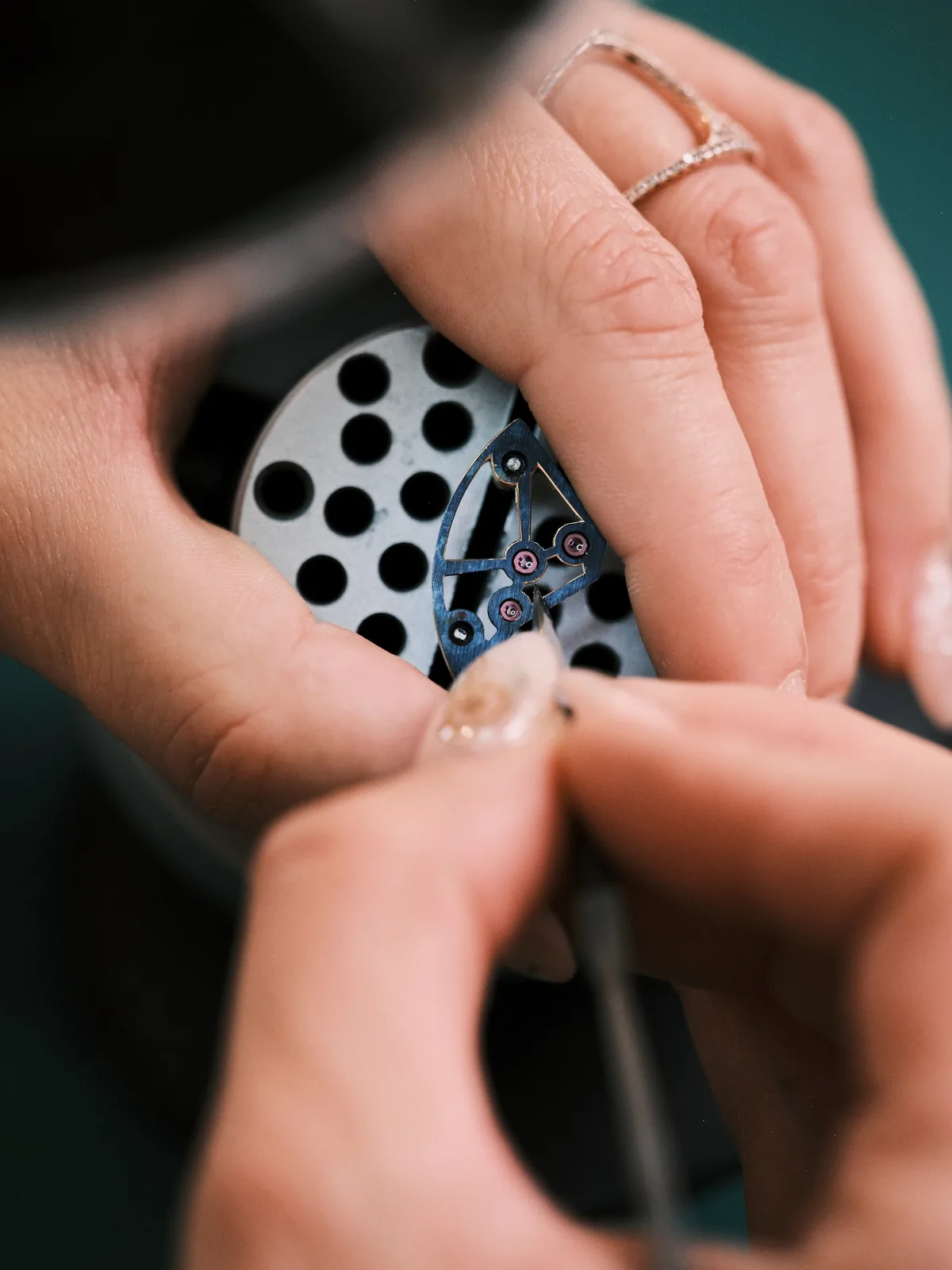
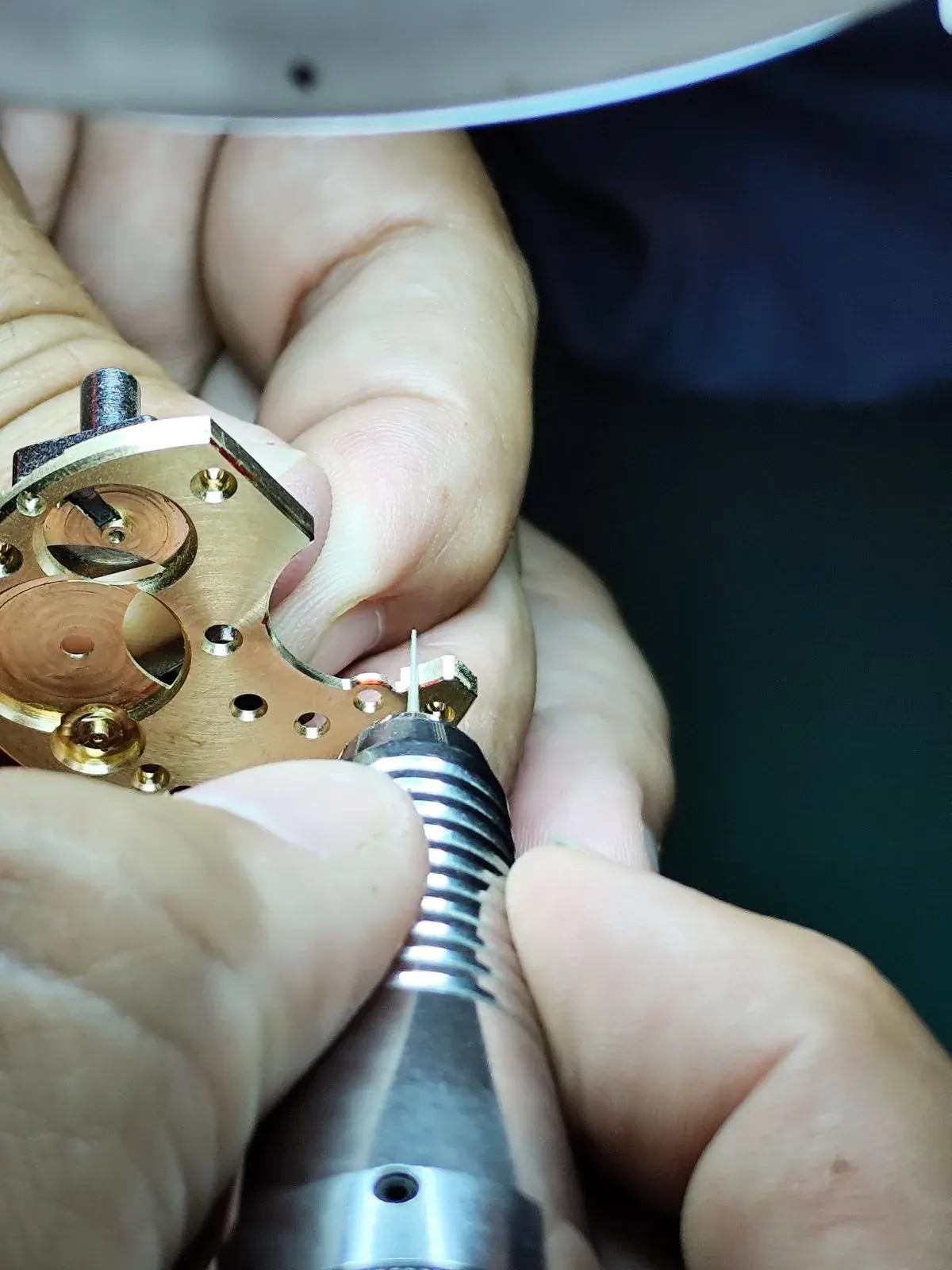
The hand gives direction to the material.Evidence of work
Twelve student paths, documented component by component.
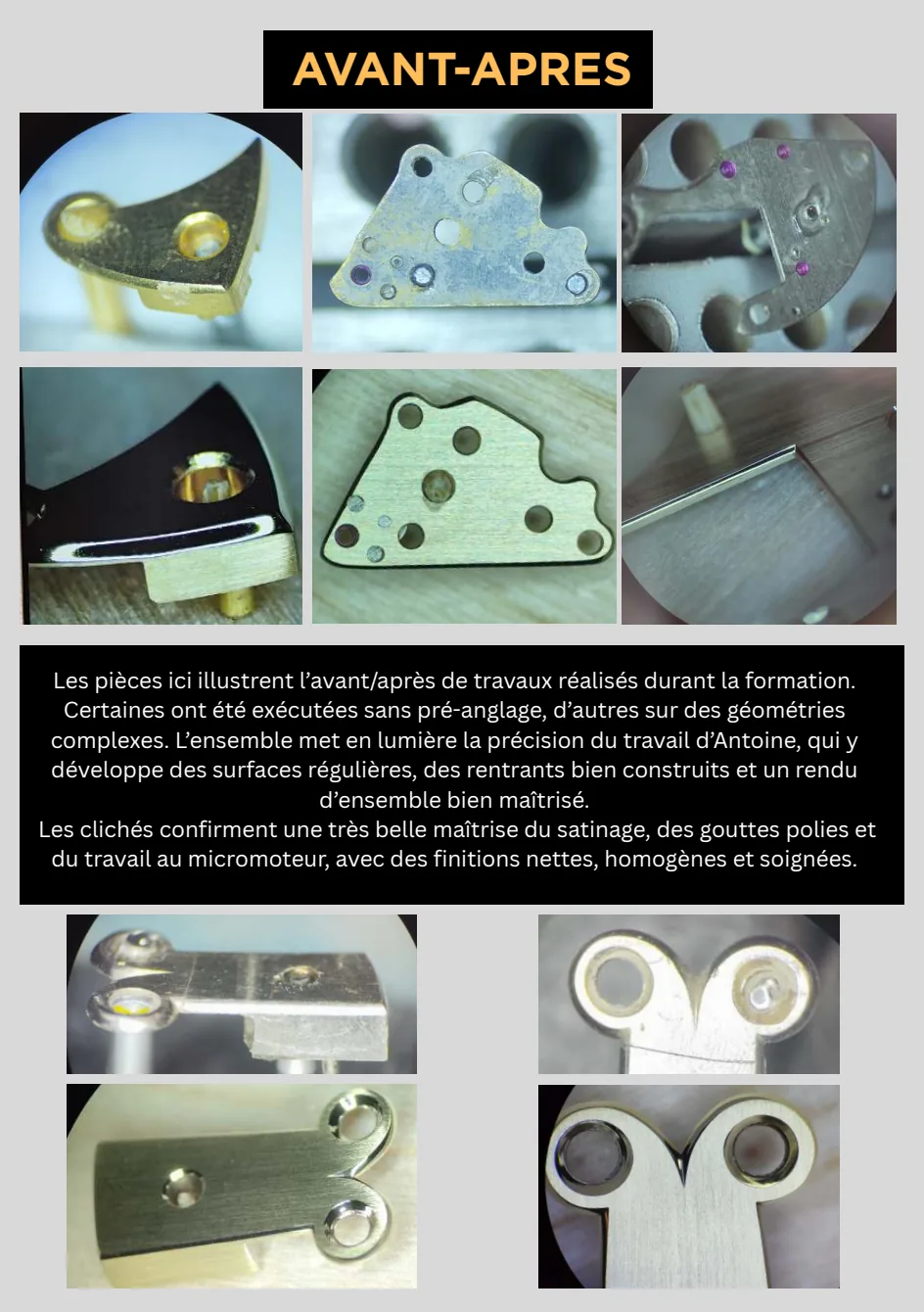
Behind every component is a person learning the craft. Before-and-after comparisons, workshop observations and twelve portfolios let you follow their work and the corrections made throughout training. The hand learns; the eye does too.
Student work · Material atlas
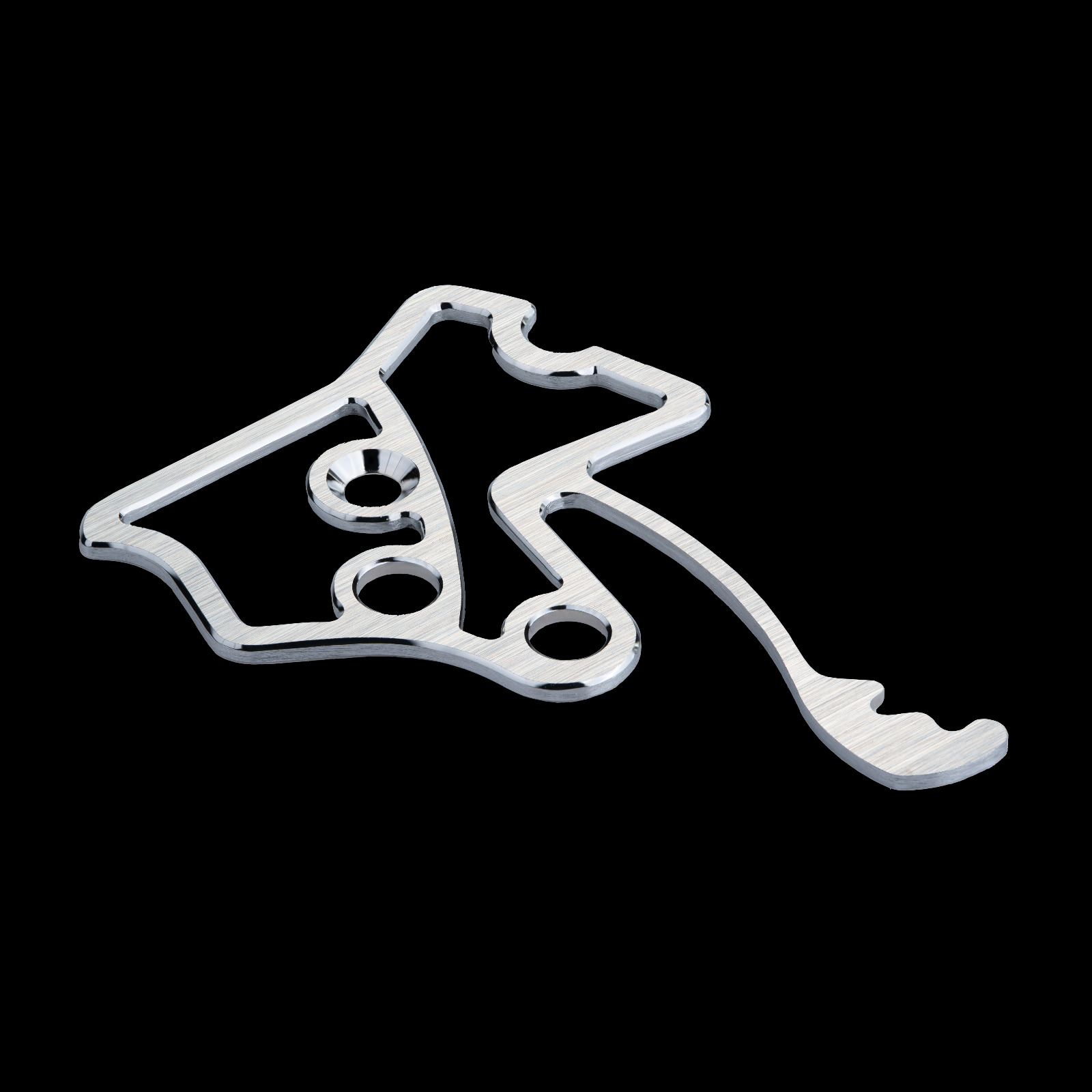
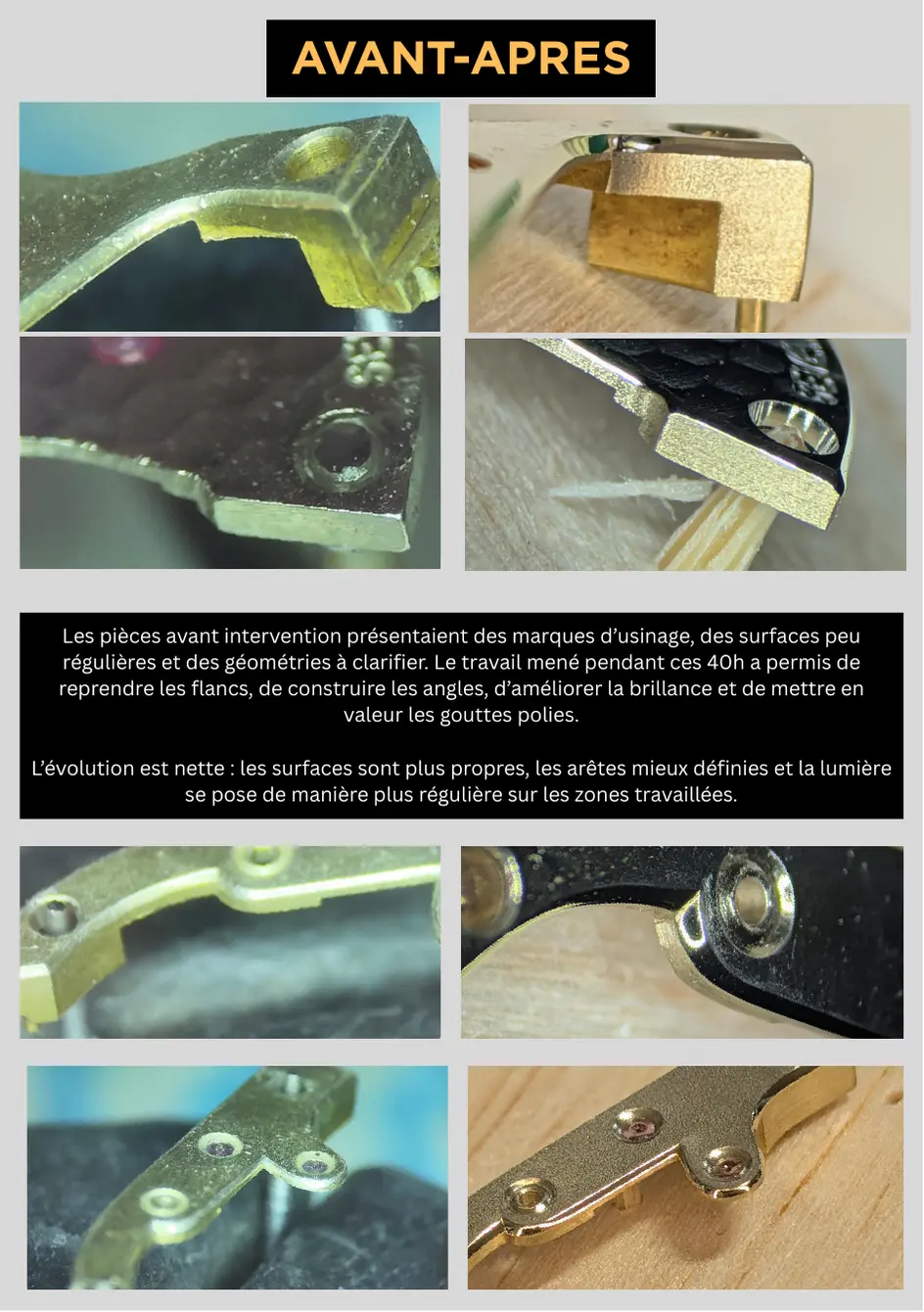
At the scale of the gesture, every bevel becomes a landscape.
Twelve fragments of student work and workshop life. Scroll from the hand to the light.


01 / 12
The material
Geometry appears as the eye moves closer.The light
Reflection makes precision immediately legible.Working collection
Open each portfolio and follow the work in detail.
Twelve student journeys, each identified by name, connect a starting point, components, techniques, corrections and observations made during training. Every complete PDF can be opened here.
12student journeys
Book 01 · 100 h
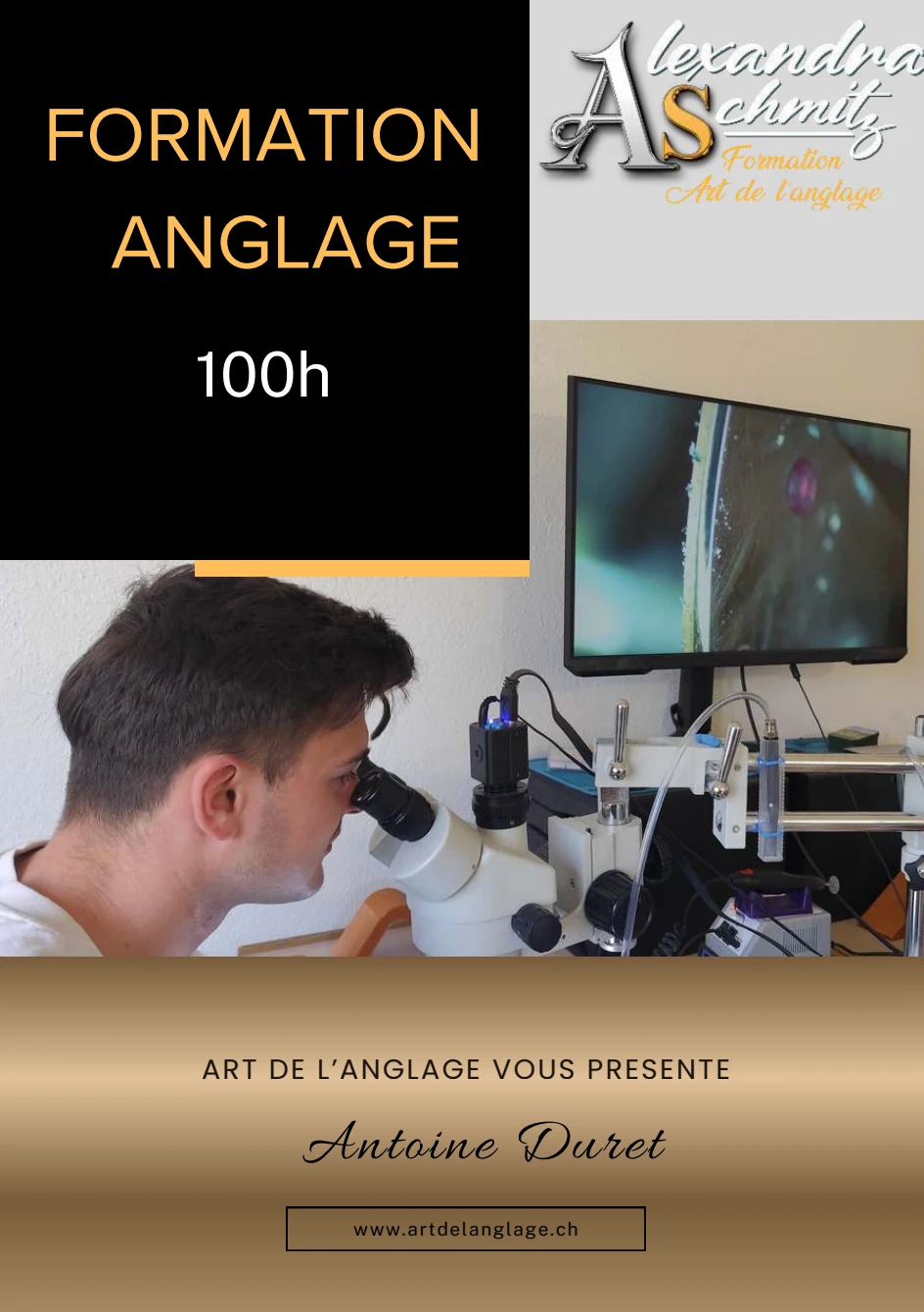
Antoine
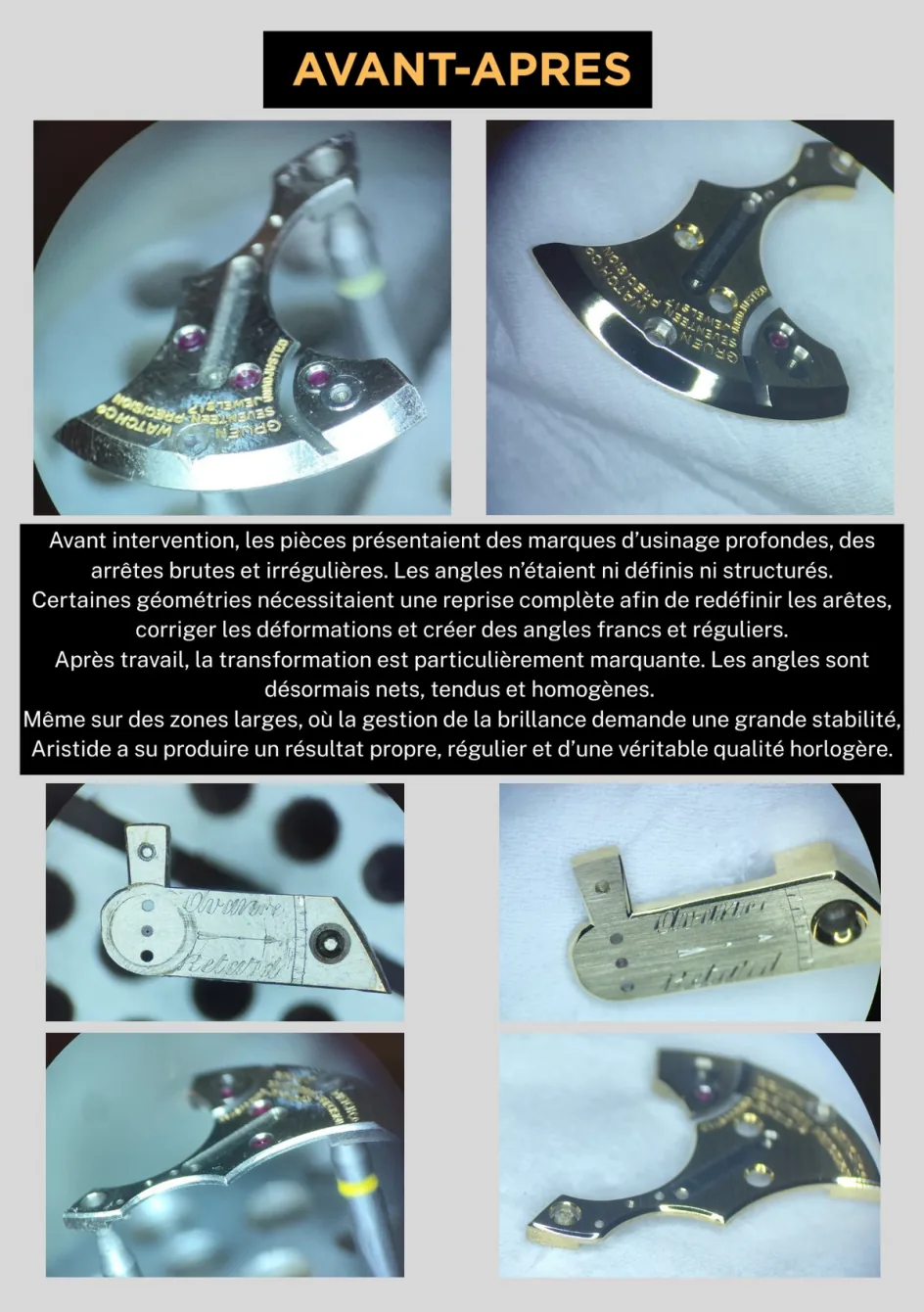
Watchmaking gave Antoine the technical base; 100 hours redirected it towards decoration. His pages move from straight-grained flanks to an internal corner and polished countersinks, ending with more regular surfaces and cleaner transitions.
Book 02 · 100 h
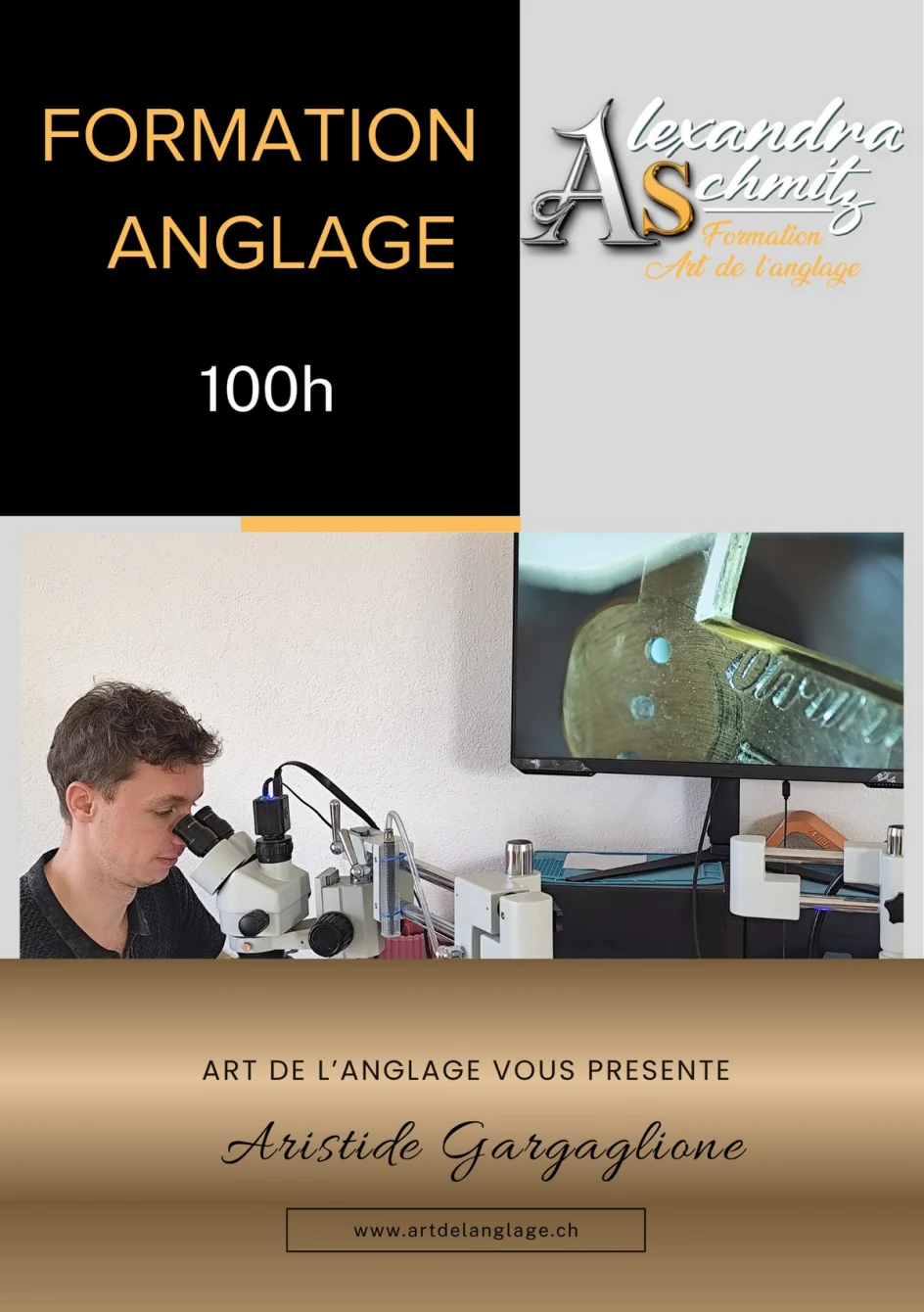
Aristide
Aristide arrived with a micromechanic’s command of geometry and tolerances. The challenge was to transfer that precision into slower, more artisanal handwork; the result shows regular lines and a particular ease with polishing.
Book 03 · 140 h
Cécile
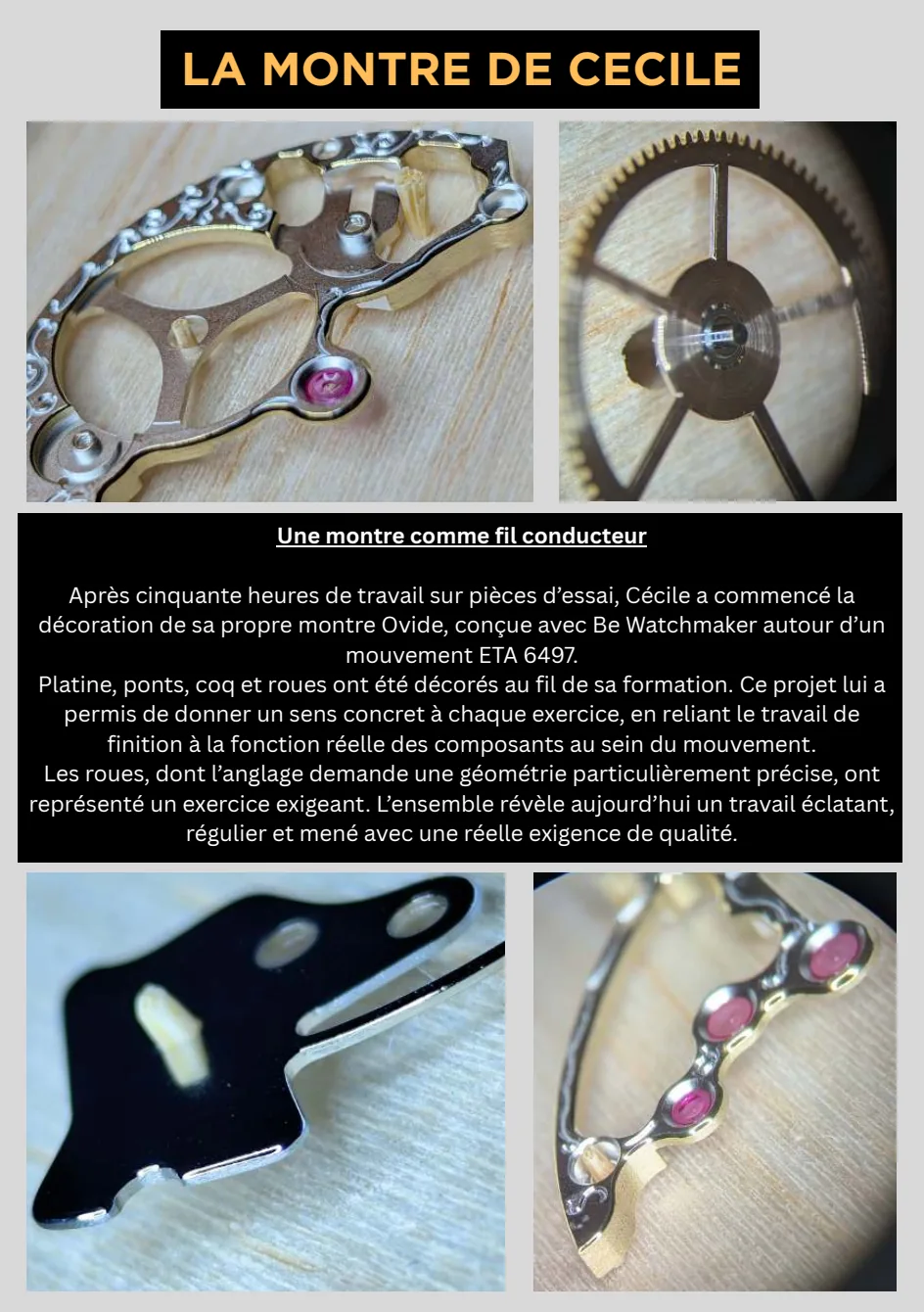
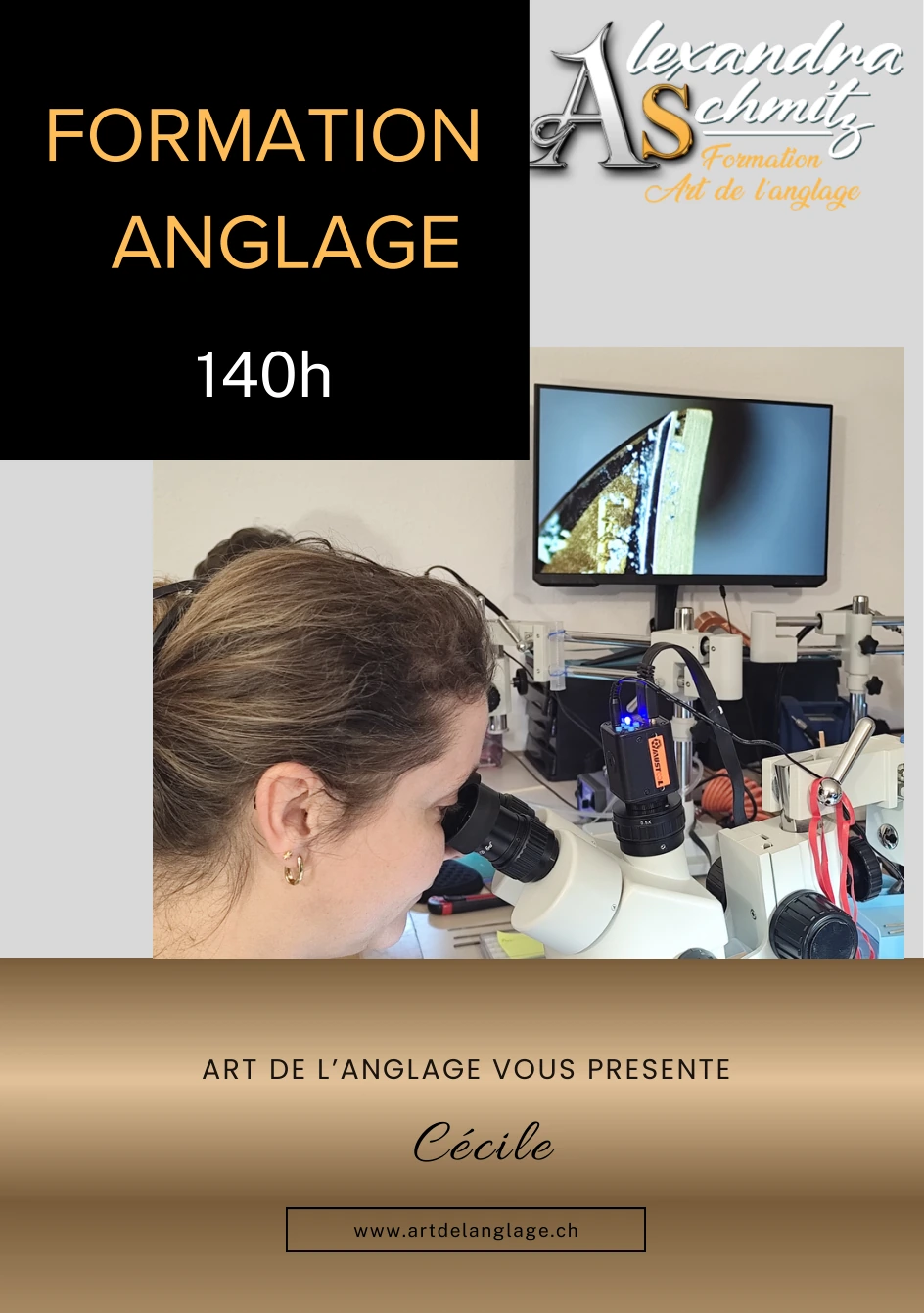
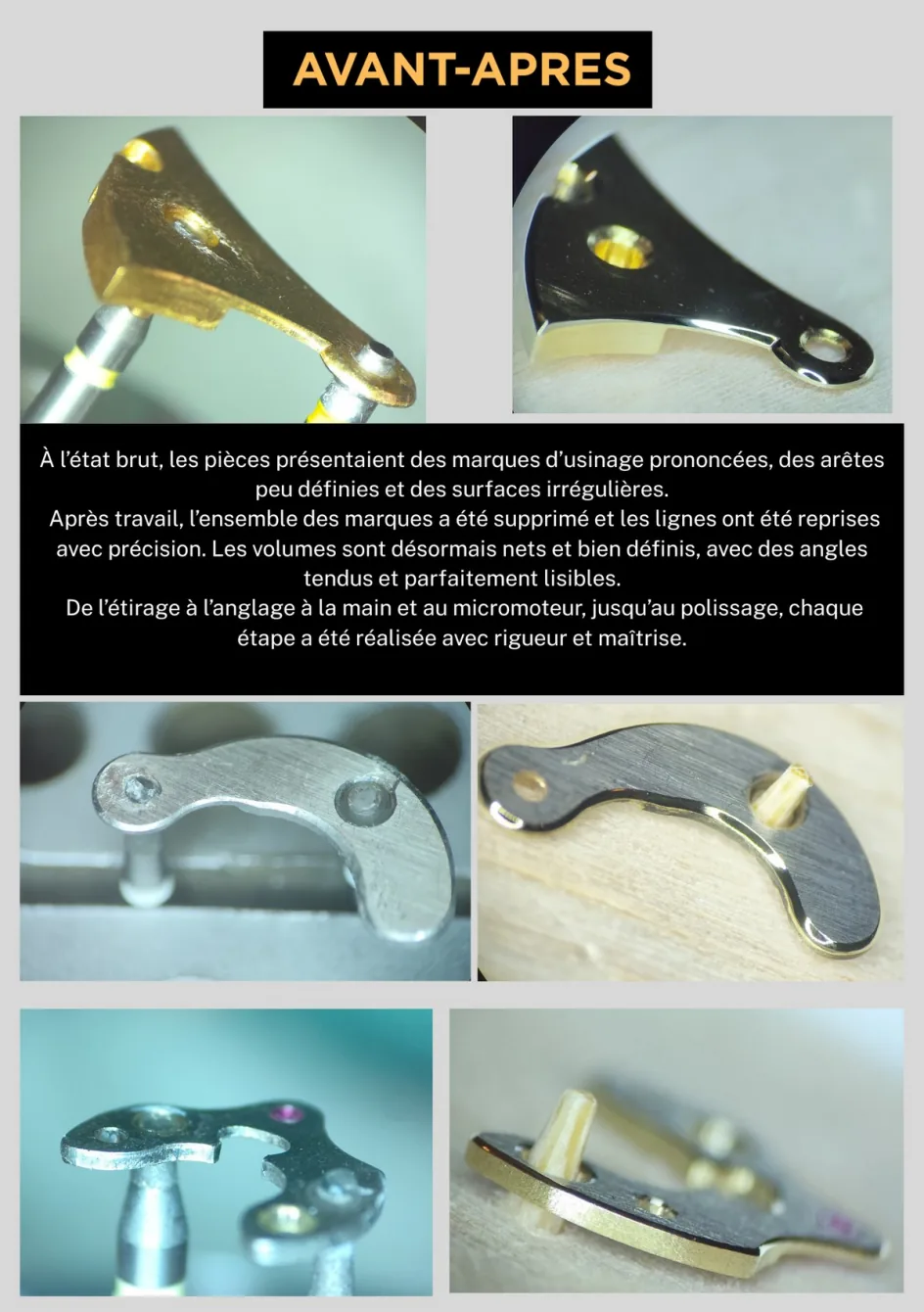
Cécile began anglage with jewellery-trained hands and one complete object in view: an Ovide/BeWatchmaker watch. Her path moves from test pieces to the plate, bridges, cock and wheels of an ETA 6497, including an internal corner.
This 140-hour path belongs to an earlier format and remains valuable for the depth of its complete-watch project.
Book 04 · 40 h
Christophe
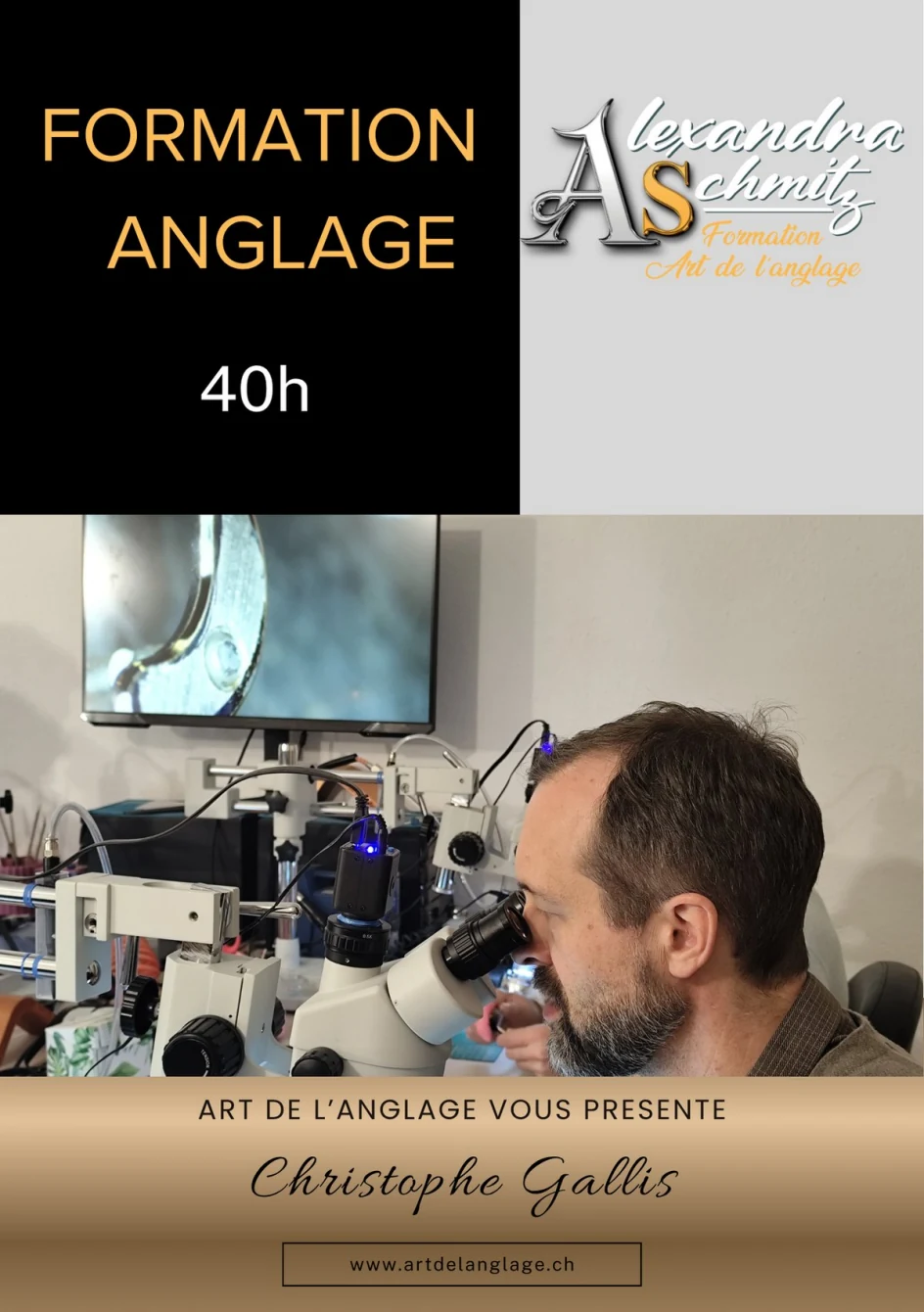
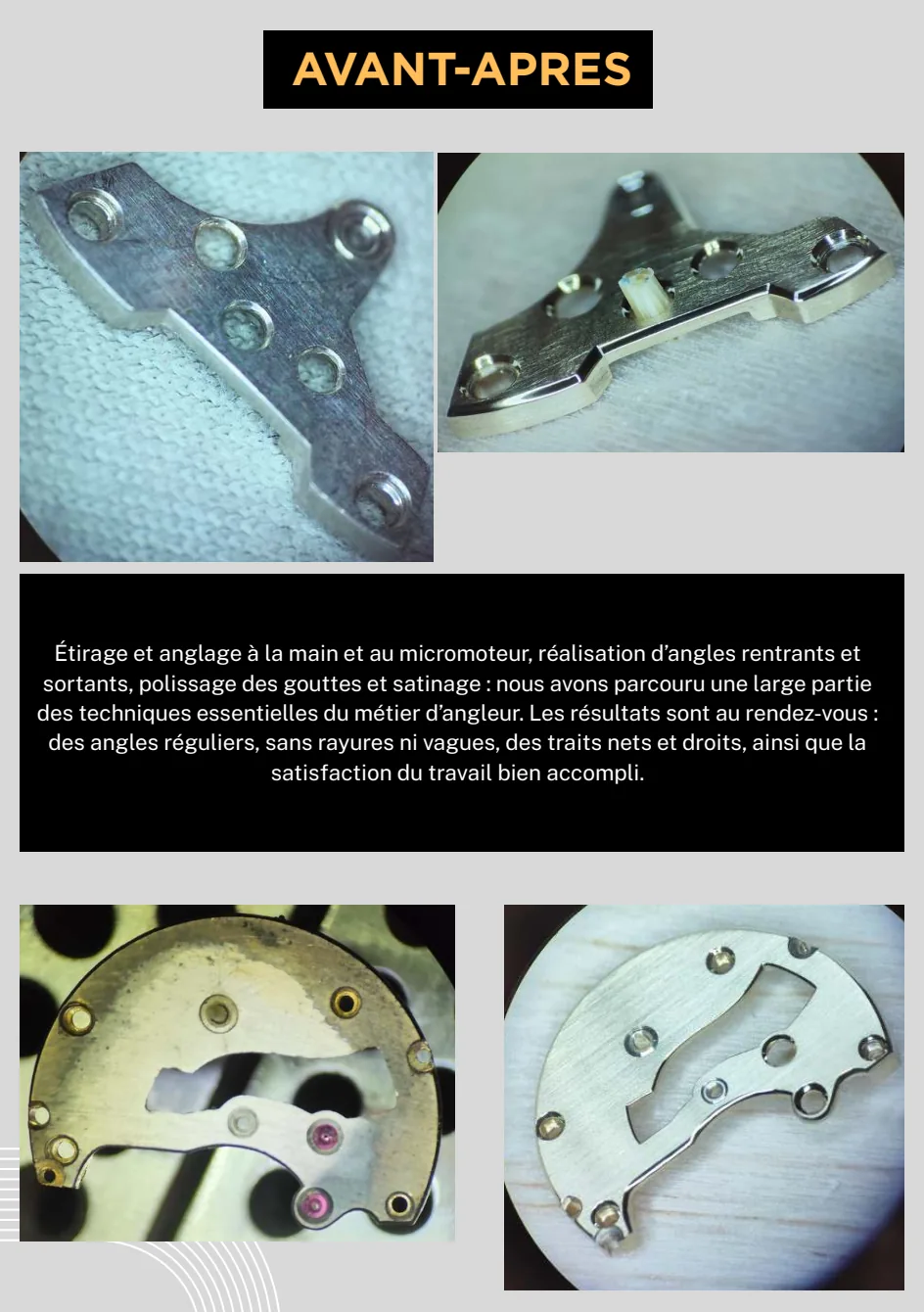
Christophe already knew watchmaking production. His focused 40 hours were about changing the standard of finish: a more precise contact line, more regular surfaces and greater control when handwork meets the micromotor.
Book 05 · 100 h
Gwenaël
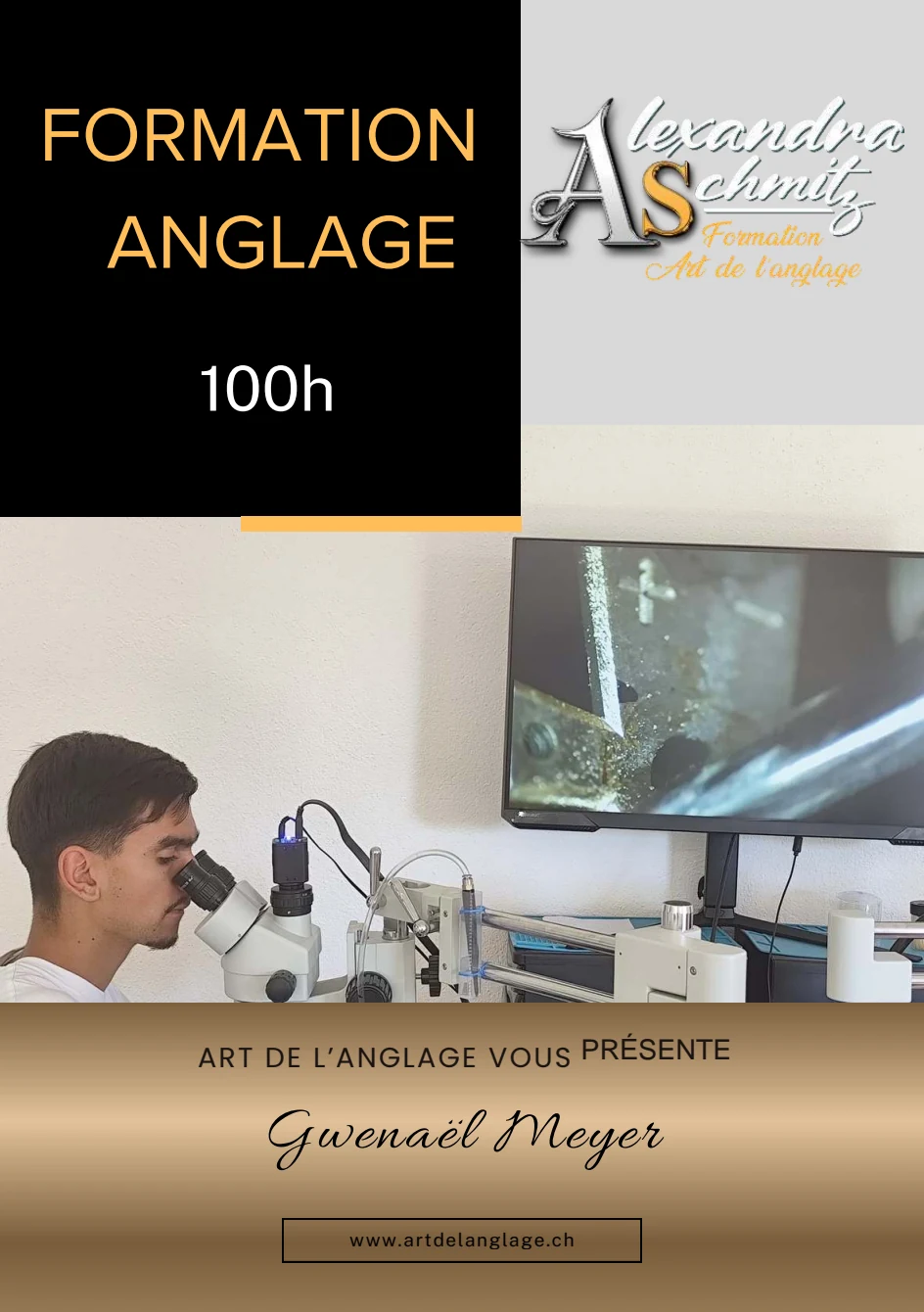
After a BMA in watchmaking and a decoration placement, Gwenaël used the 100-hour programme to consolidate his entry into the craft. His book shows consistent bevels and close attention to corners and dimensions.
Book 06 · 100 h
Jérôme
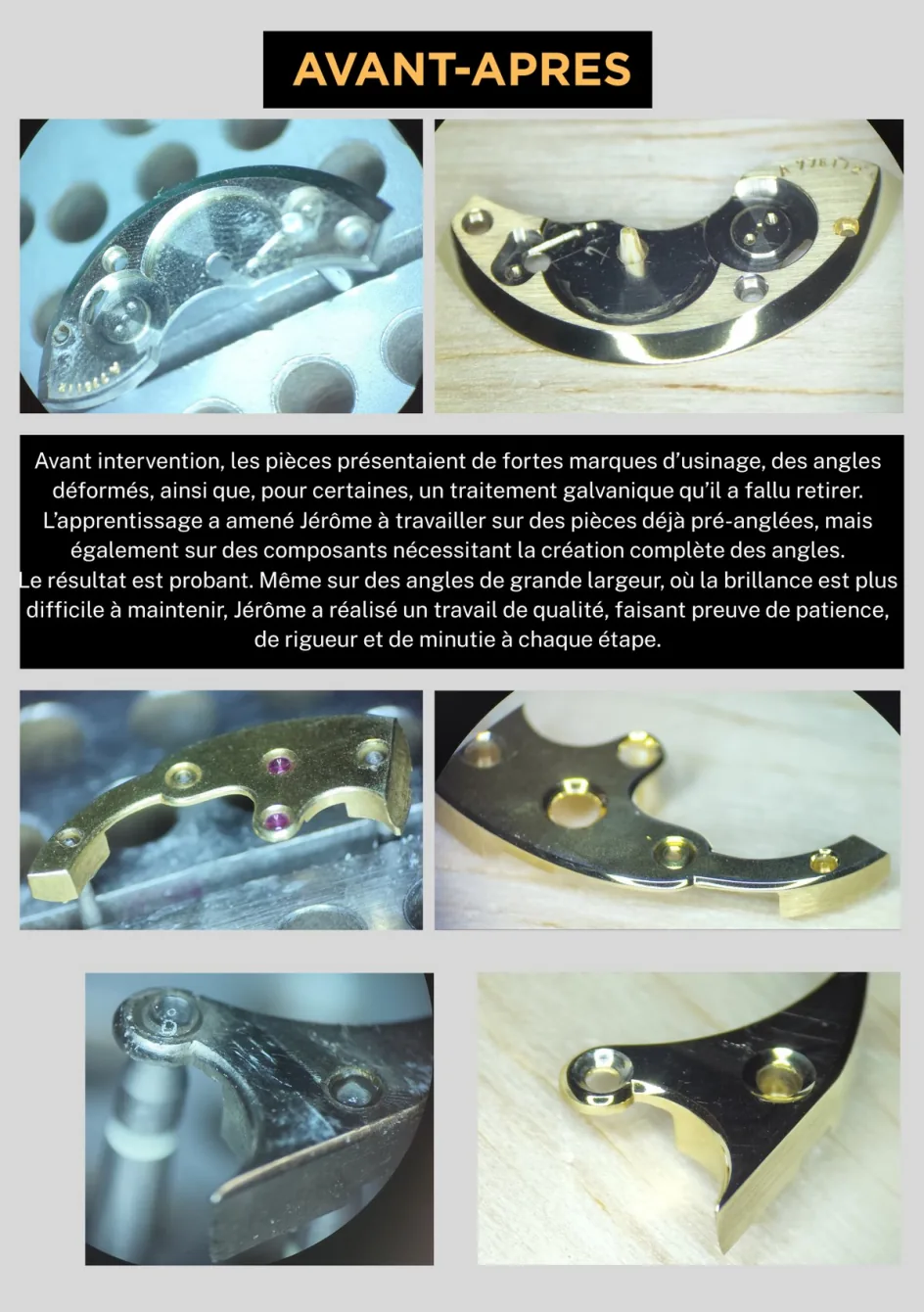
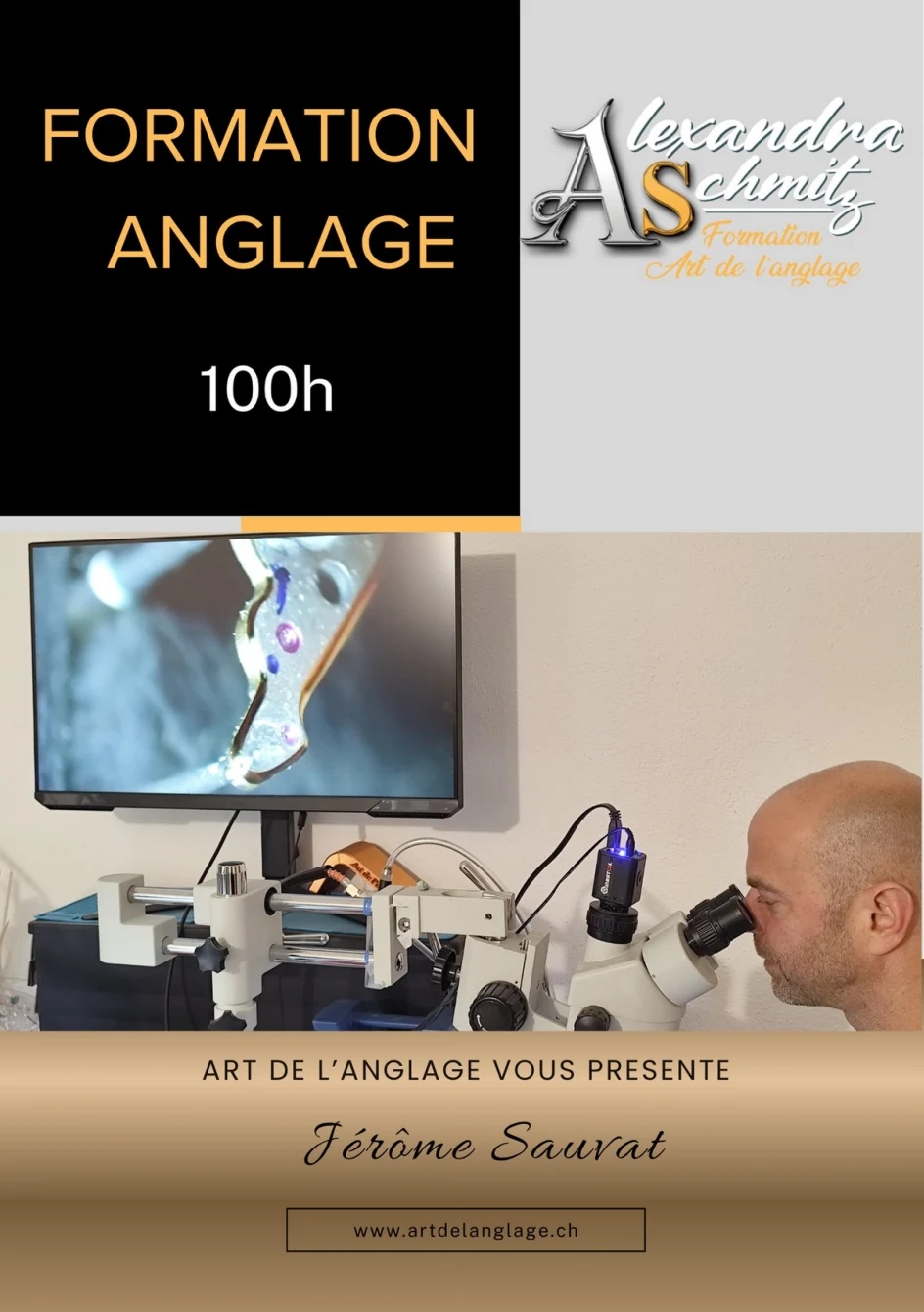
Jérôme brought a watchmaker’s fluency in mechanics and technical drawings to a demanding specialism. His progression is distinguished by patience, adaptation to each material and inventive tooling solutions when the geometry resists.
Book 07 · 100 h
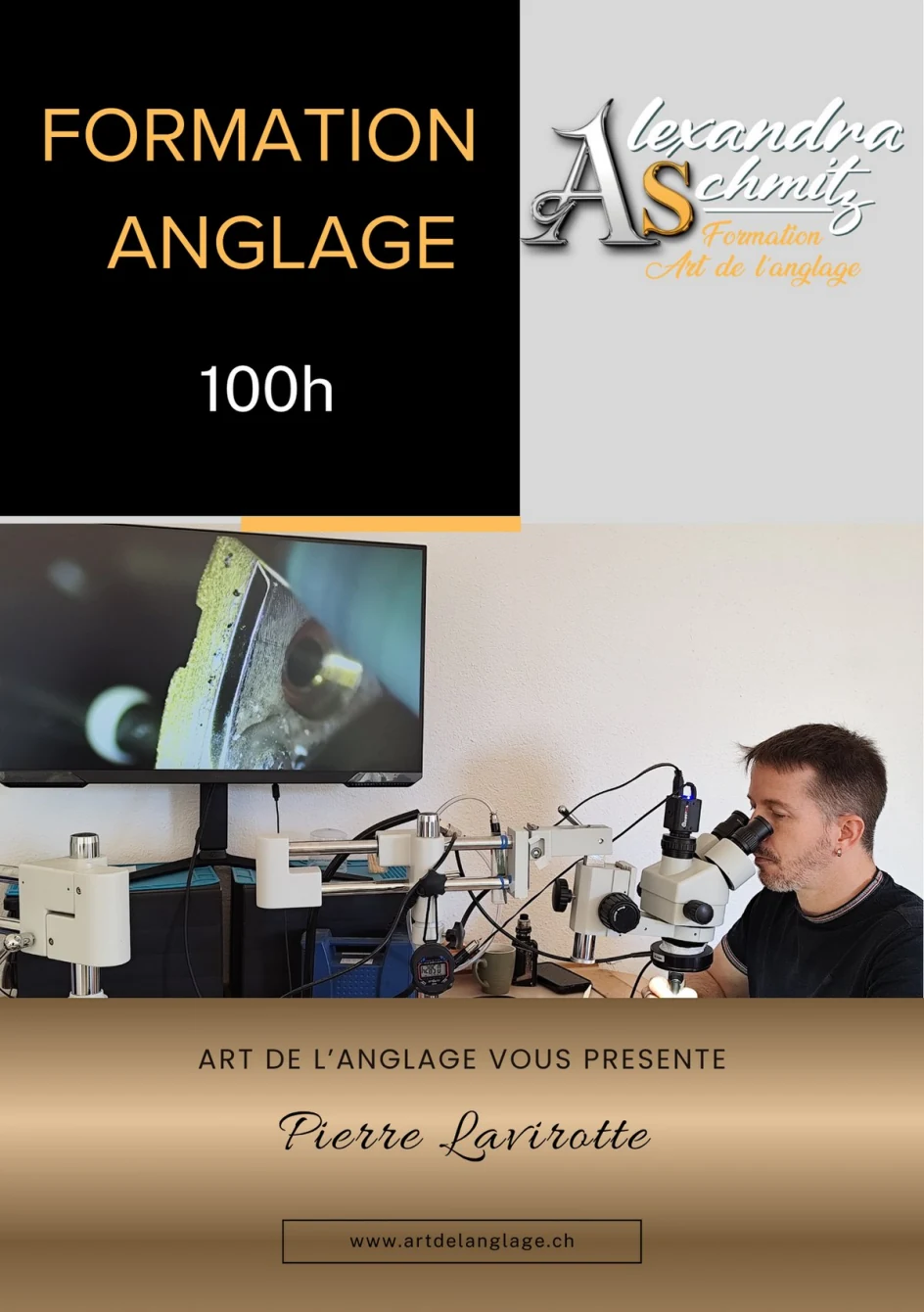
Pierre
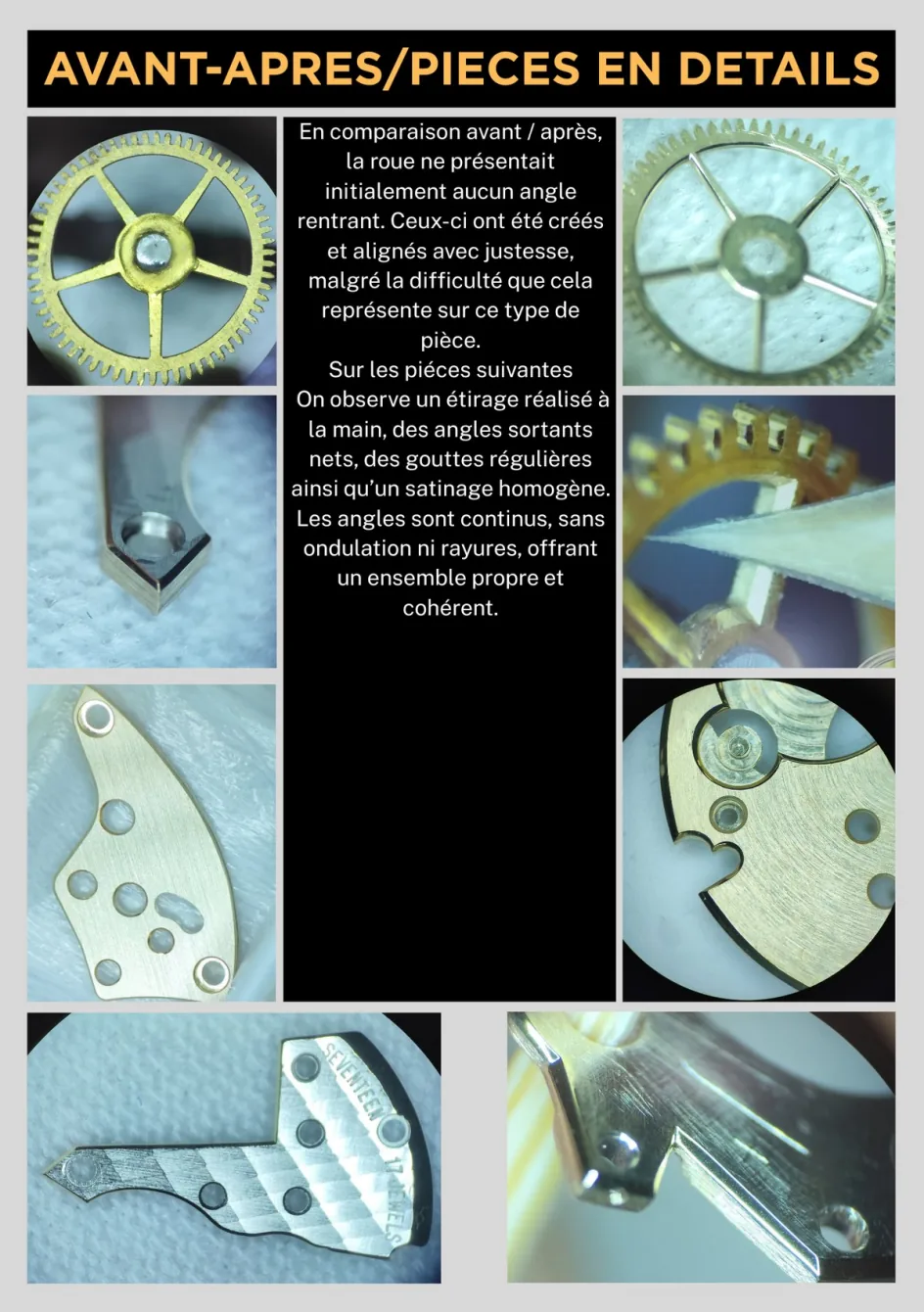
Pierre moved from fast, precise CNC machining towards the slower judgement of artisanal finishing. His pages focus on pronounced inner corners, regular surfaces and preserving the component’s volumes throughout the correction.
Book 08 · 100 h
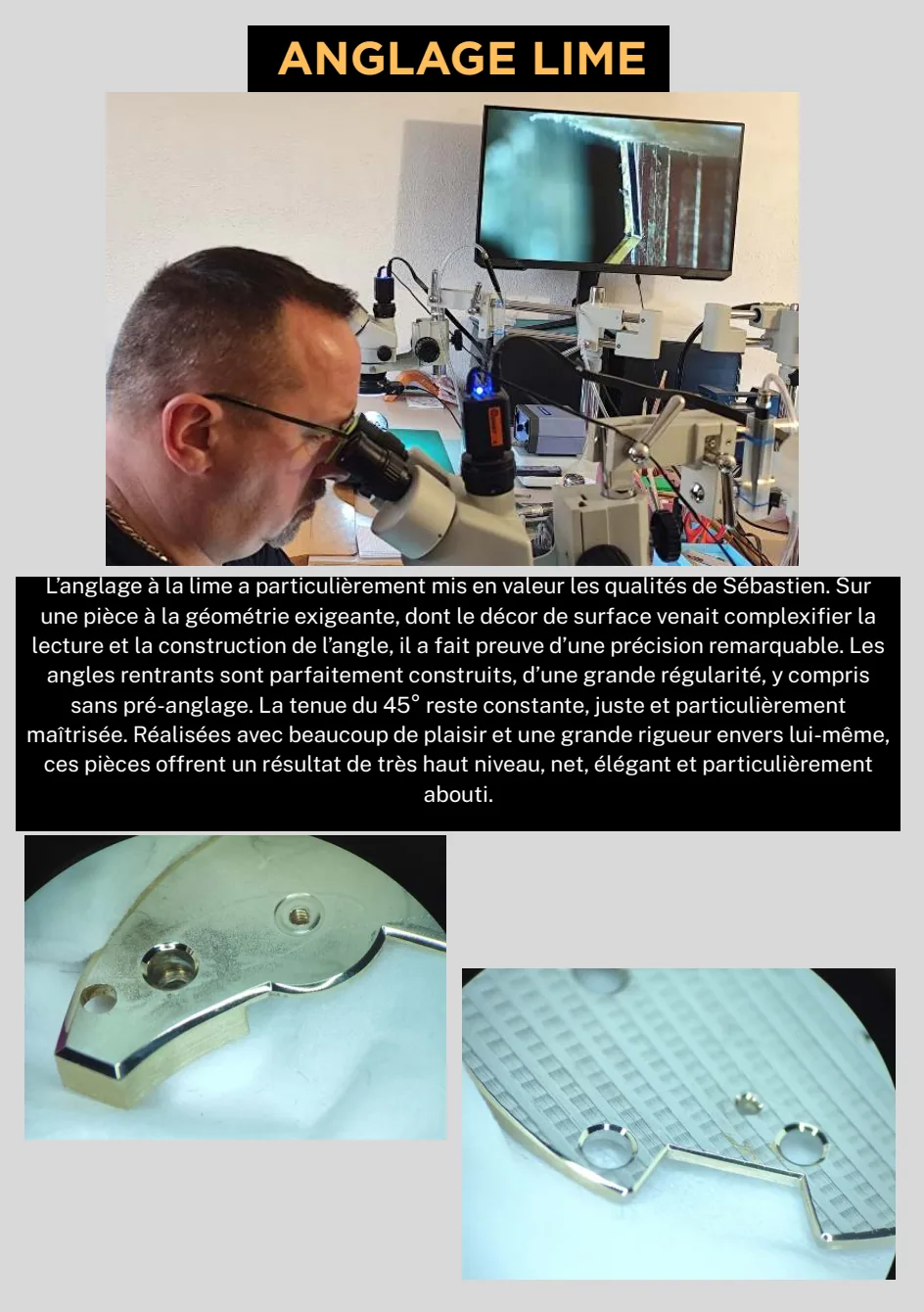
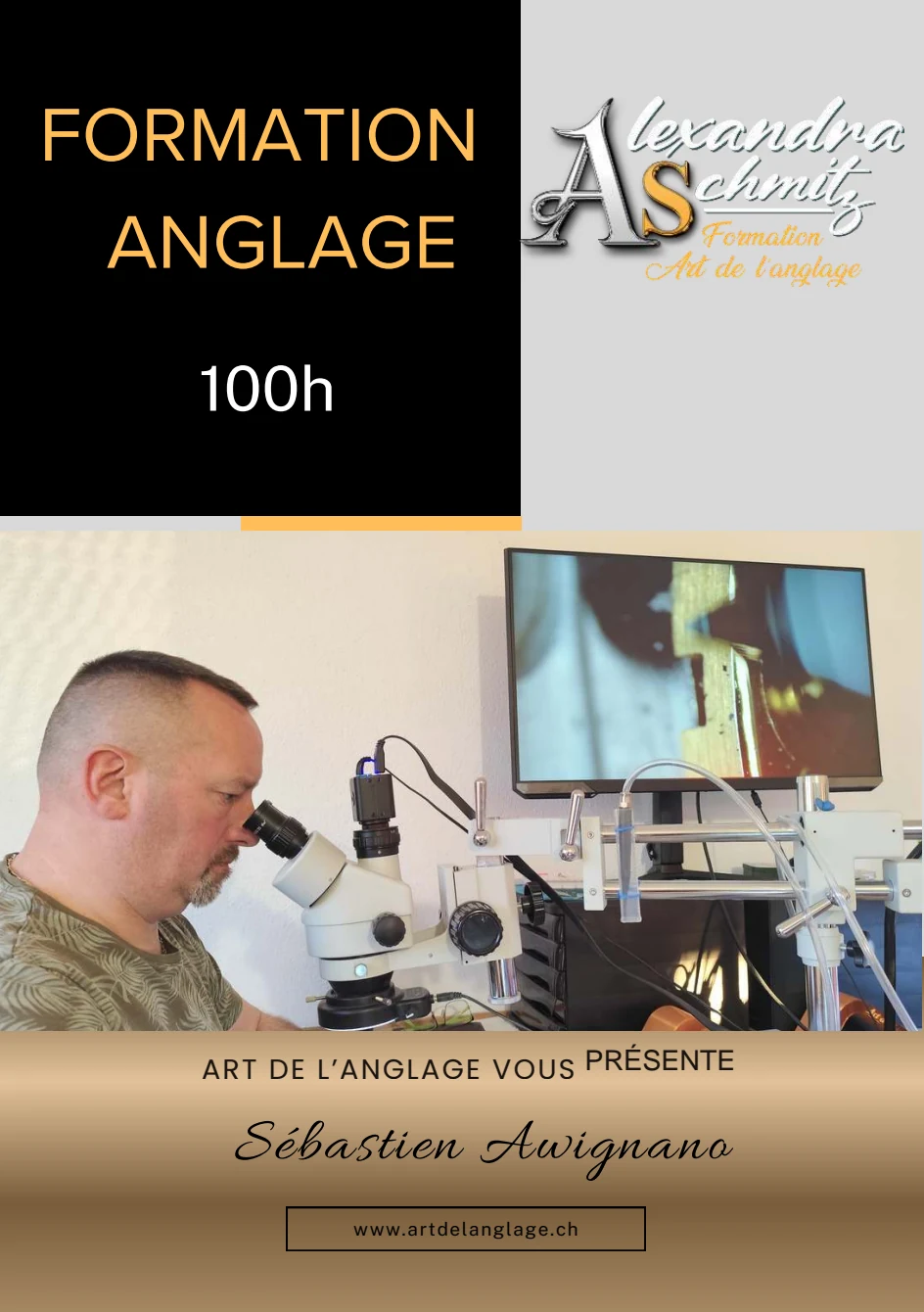
Sébastien
Maintenance, mechanics, bar turning and movement decoration had already given Sébastien a broad technical range. He used it to confront demanding geometries, with particular focus on internal corners, clean exits and control of the 45-degree line.
Book 09 · 40 h
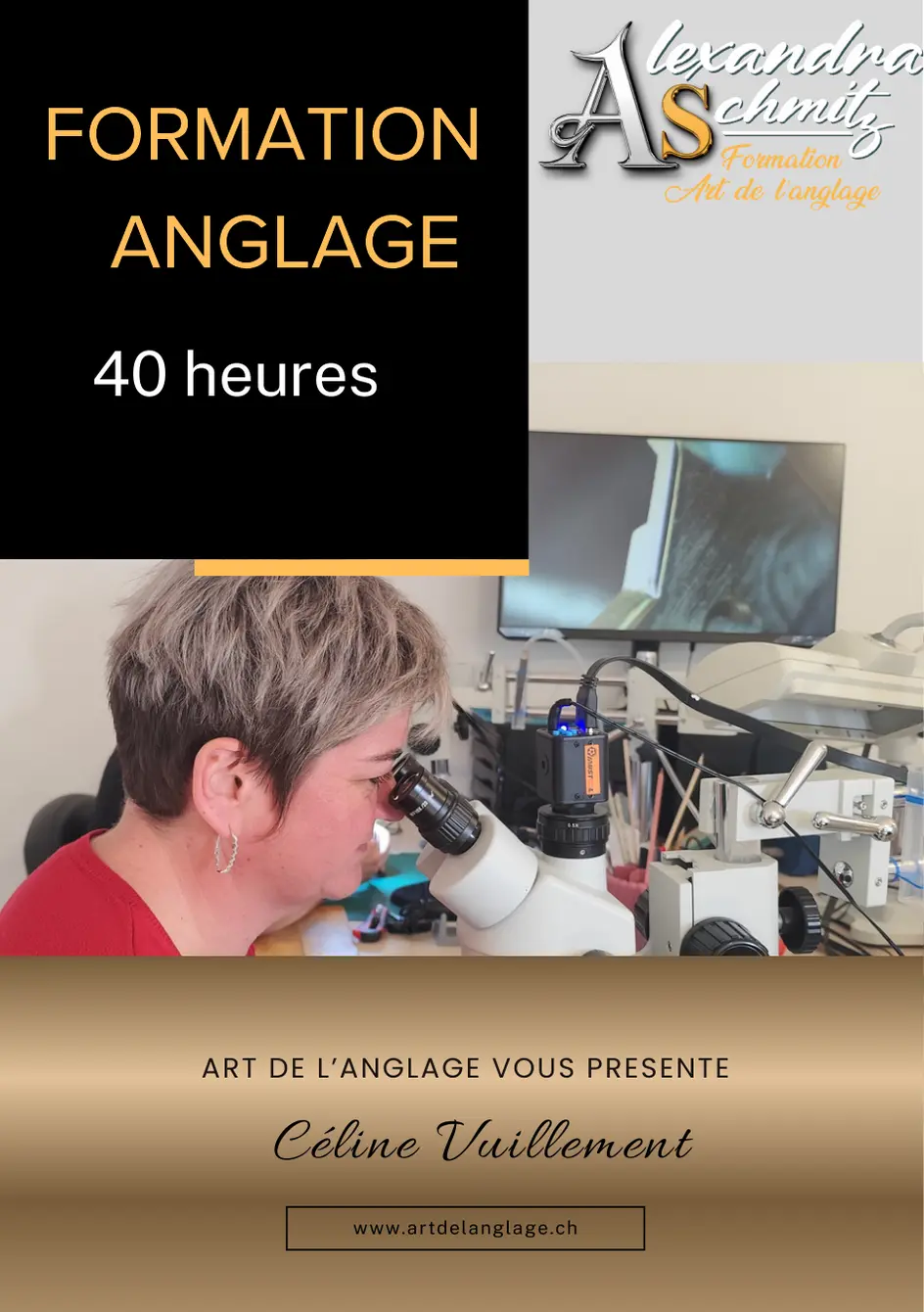
Céline
Céline already decorated dials and movements. Her 40-hour path was about stabilising the hand and sharpening the eye, using internal corners and polished sinks to test continuity of light.
Book 10 · 40 h
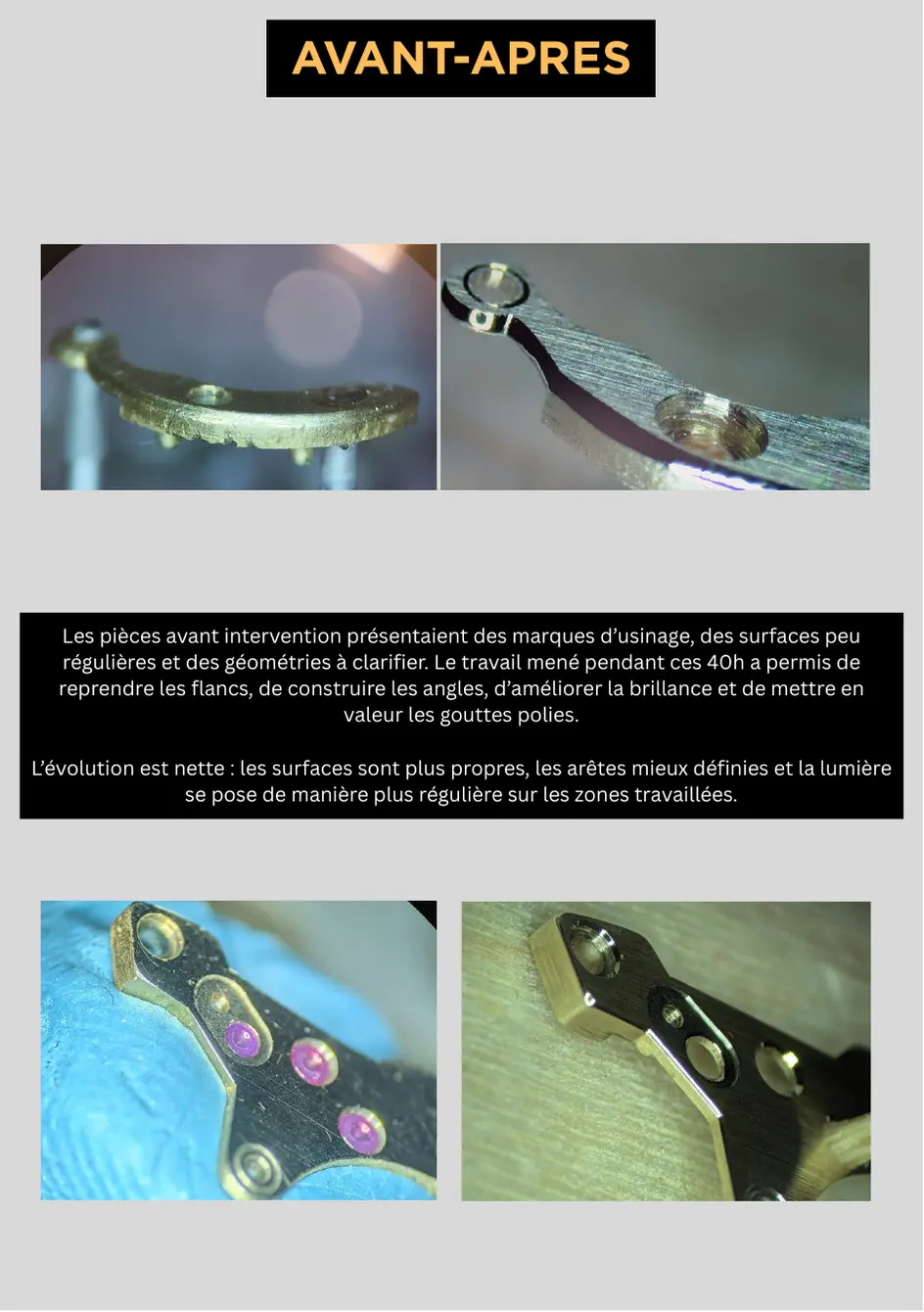
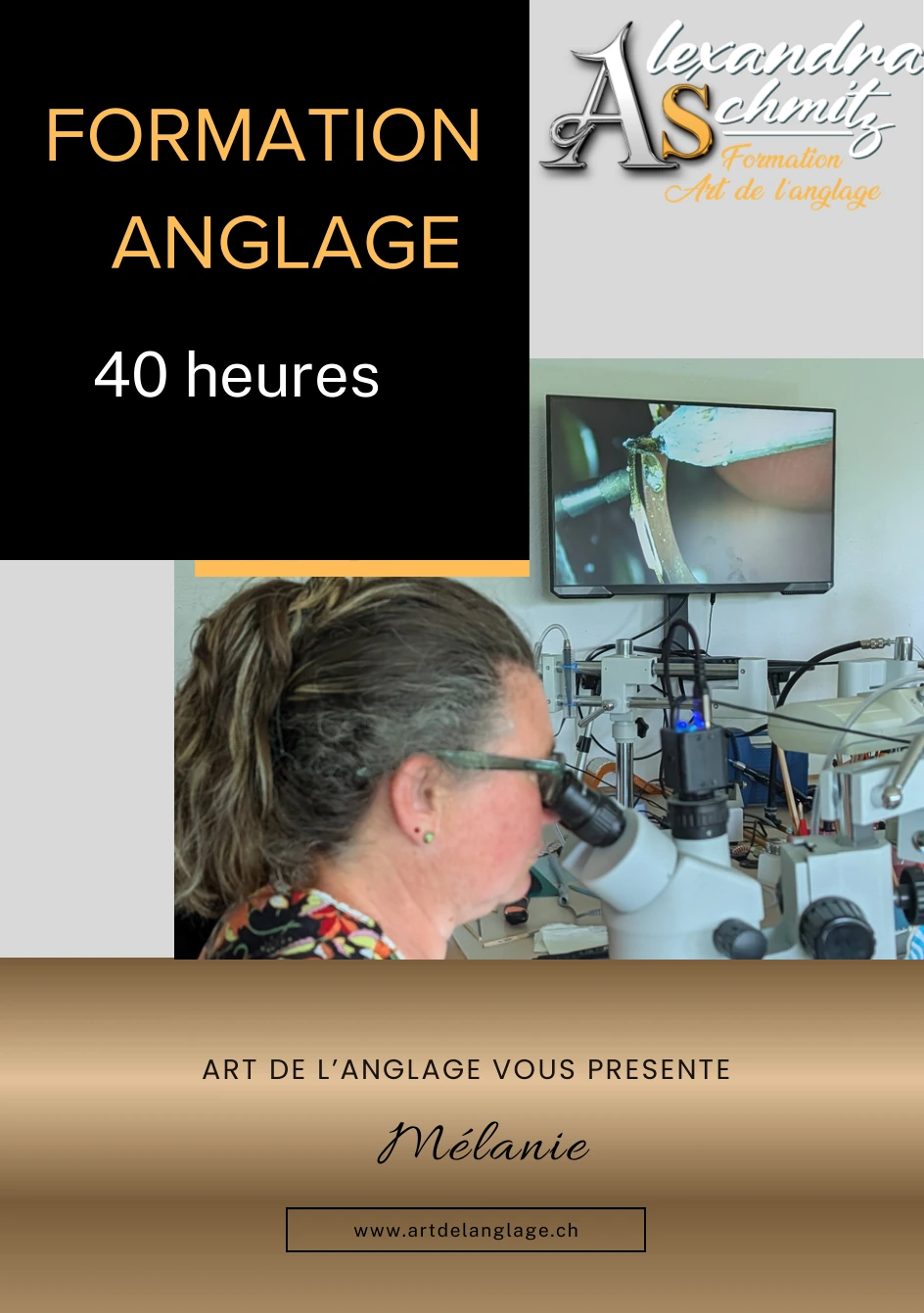
Mélanie
Mélanie’s jewellery background gave her an immediate feel for material and strong manual precision. In 40 hours, that instinct became regular flanks, controlled external and internal corners, satin finishing and polished sinks.
Book 11 · 100 h
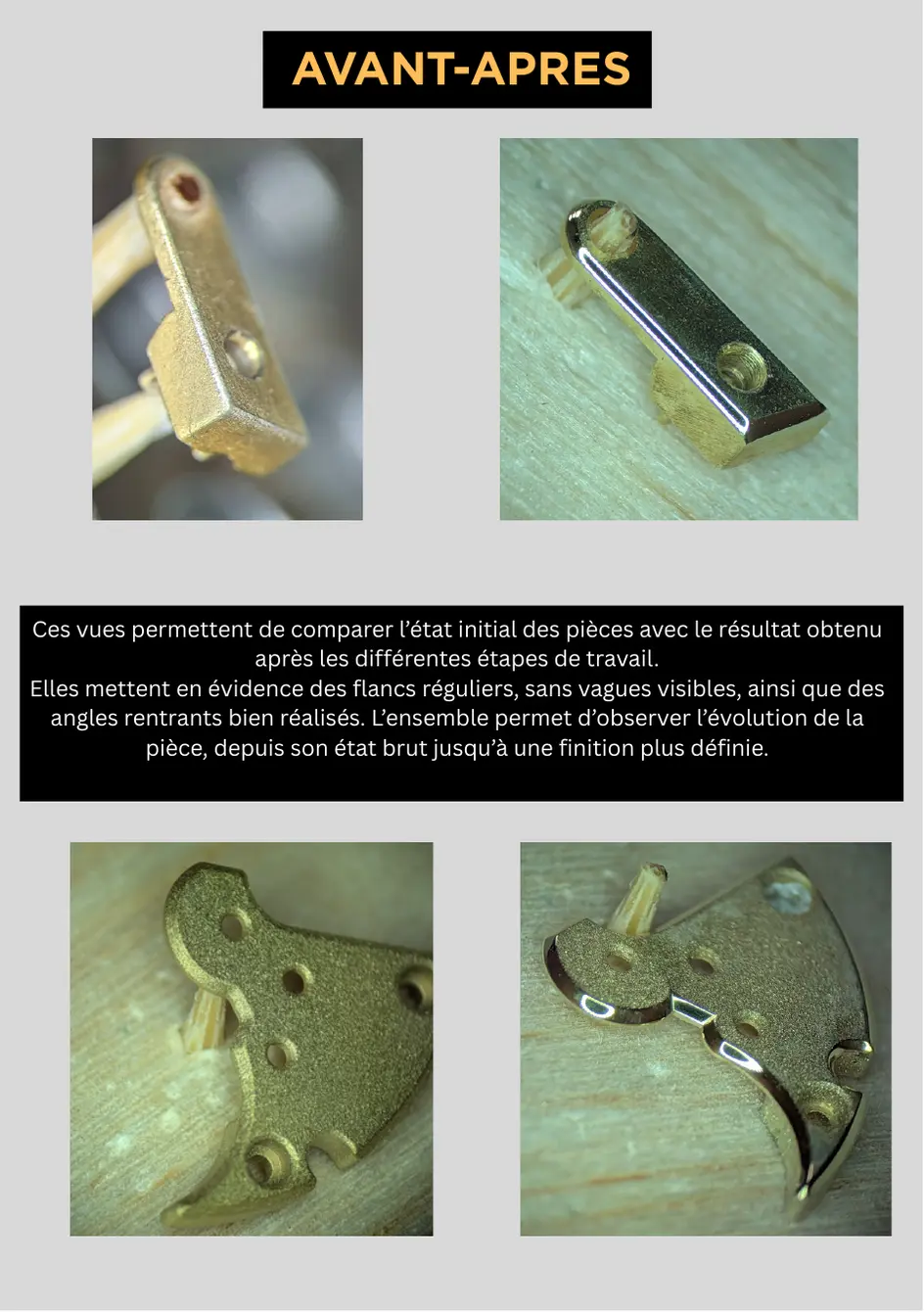
Renata
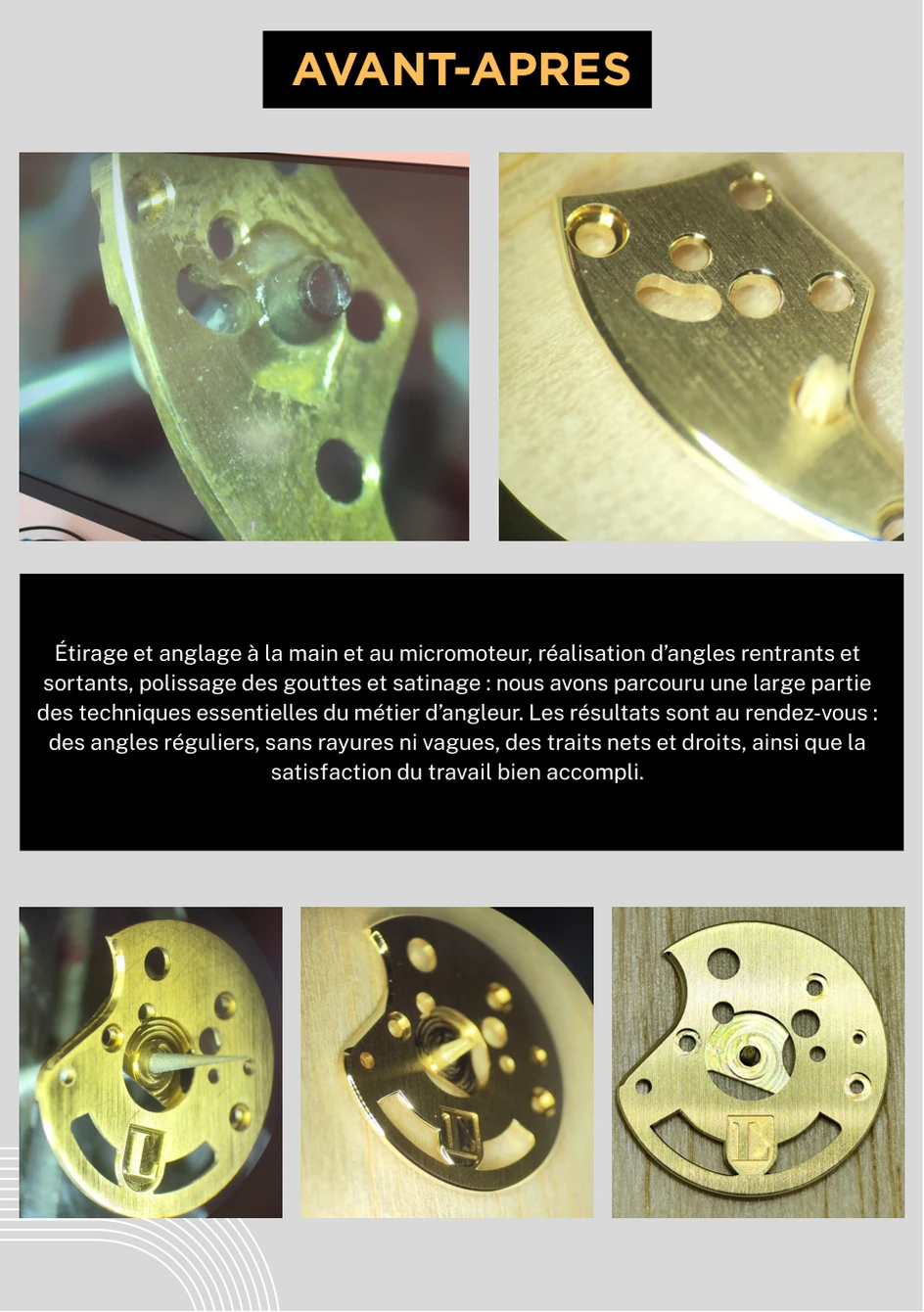
Dial production, CNC setting and quality control taught Renata how to judge a result. Over 100 hours she built the method to produce it herself; the comparisons show more regular surfaces and better-controlled internal corners.
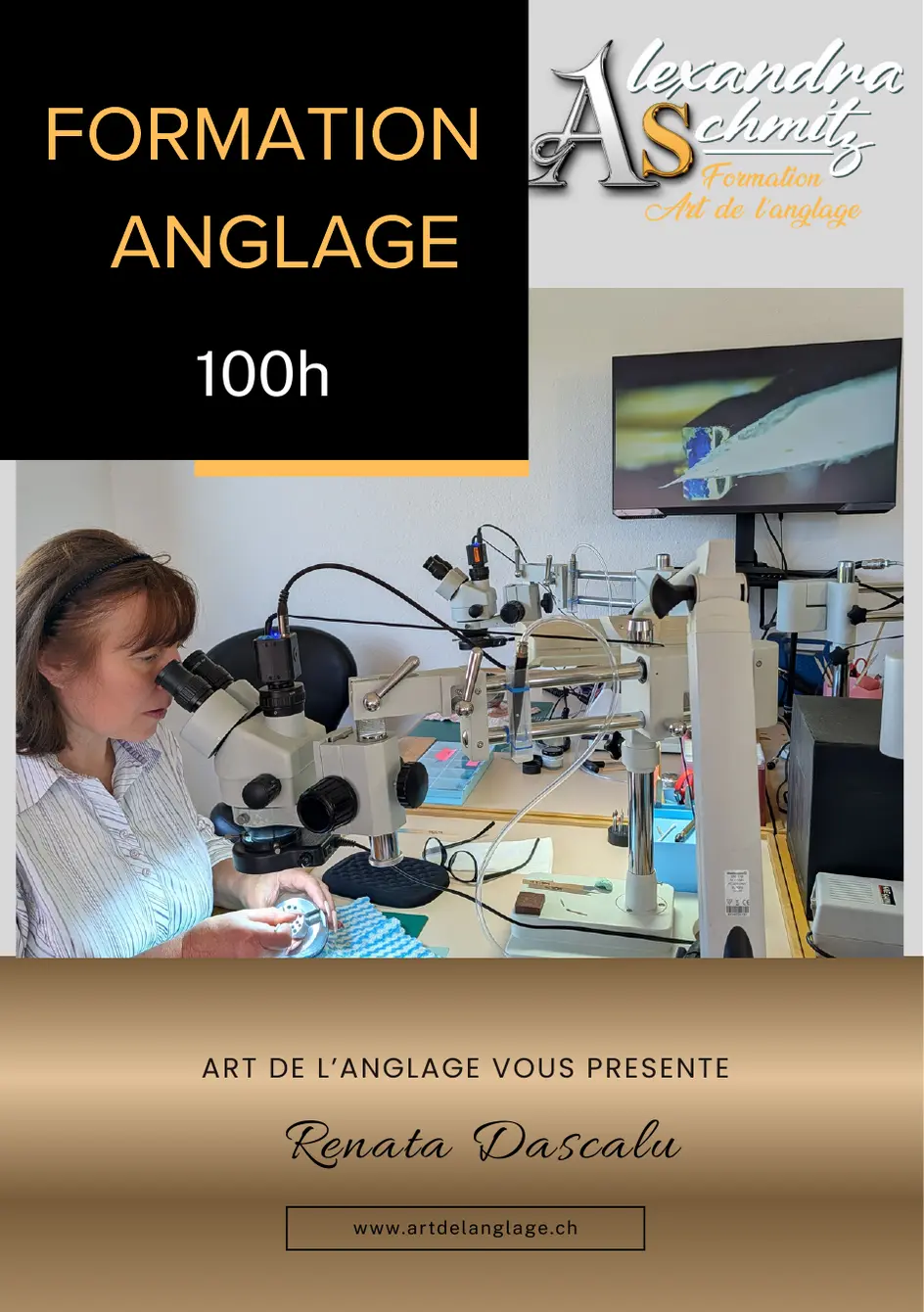
Book 12 · 100 h
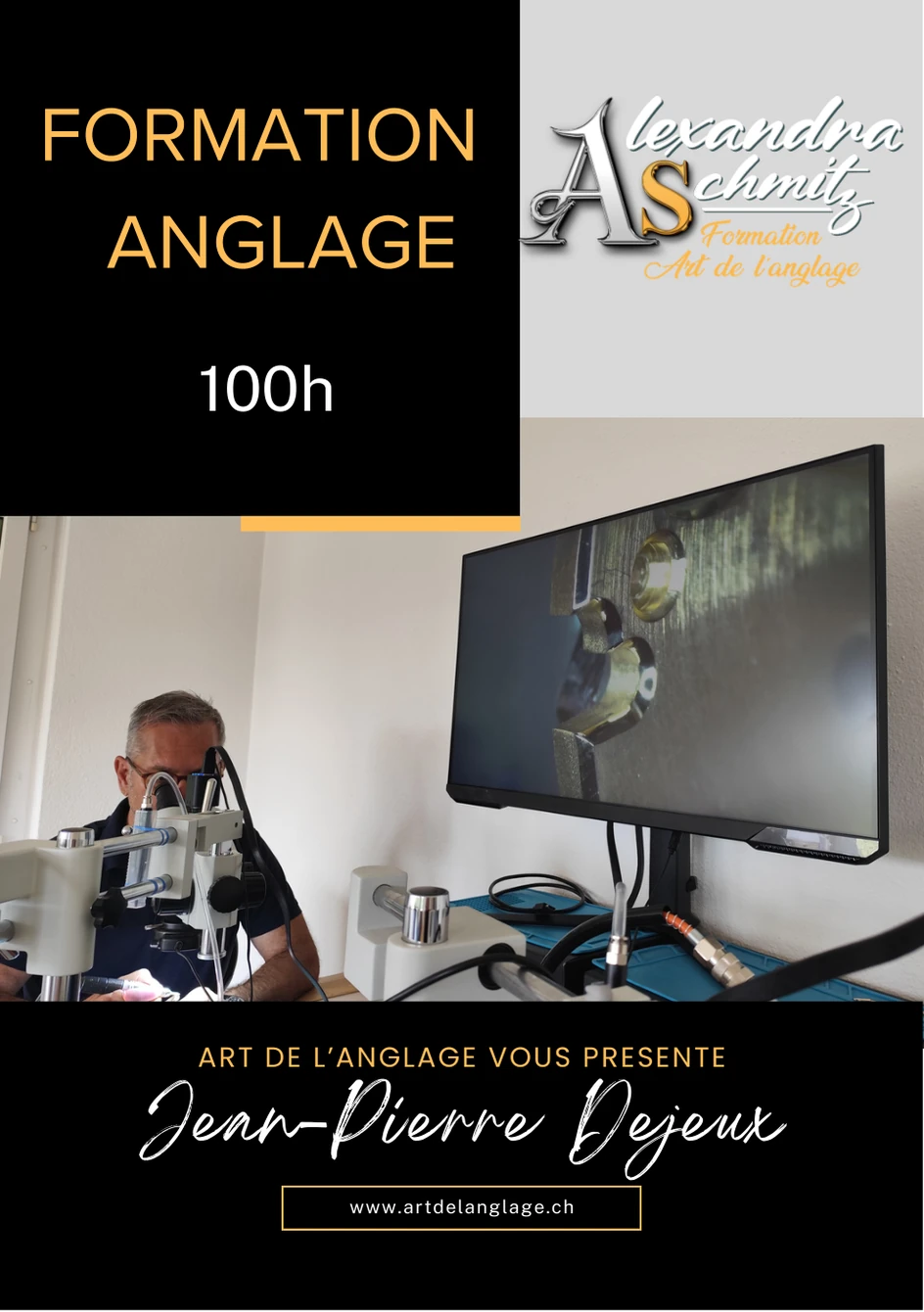
Jean-Pierre
Previously an international investment banker, Jean-Pierre retrained in anglage and watch decoration. During 100 hours of training, he progressed from flank finishing to hand and micromotor anglage, then satin finishing and polished gouttes.
01 / 12
Antoine
Scroll down to explore the books to the right. On mobile, swipe through the collection. Keyboard navigation remains available. The twelve paths are presented without ranking.
After the evidence
Move from evidence to a decision.
Compare the course structures, or ask Alexandra which documented path is closest to the result you want.