Watch anglage training · Les Brenets · 4 participants

Which format is right for you?

8h to enter the workshop. 40h to correct and steady. 100h to build.

The pathway opposite shows what is actually worked on in the workshop. The comparison below then helps you choose according to your starting point, not according to a logic of prestige.

Training pathway
Theoretical foundations
01 · Theoretical foundations

Setting the useful reference points.

The work begins with what needs to be understood so that you do not operate blindly: vocabulary, related finishes, materials and a basic reading of a technical drawing.

  • Related finishes and useful vocabulary
  • Metals, materials and a basic reading of a technical drawing
02 · Bench setup and ergonomics

Setting yourself up properly from the outset.

Posture, bench setup and the role of the tools are established straight away so that bad habits do not settle in.

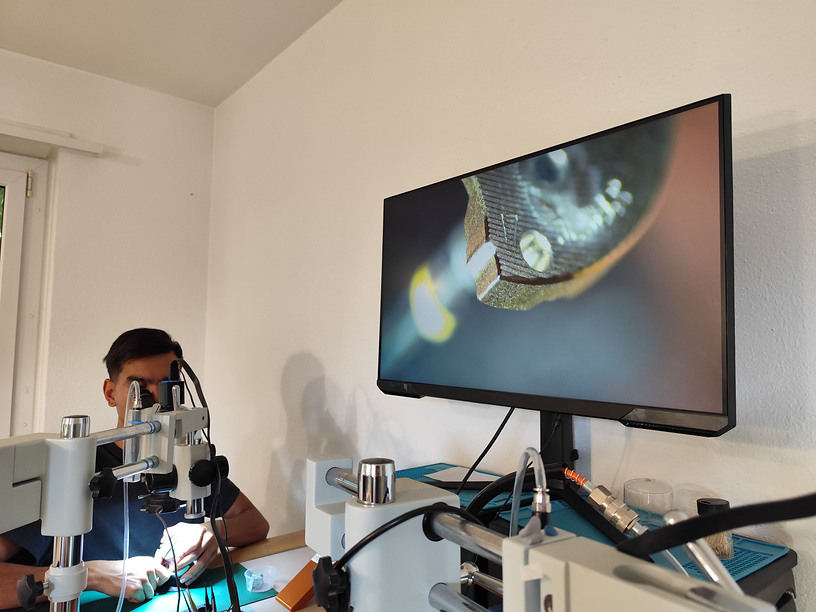
  • Posture, ergonomics and setup logic
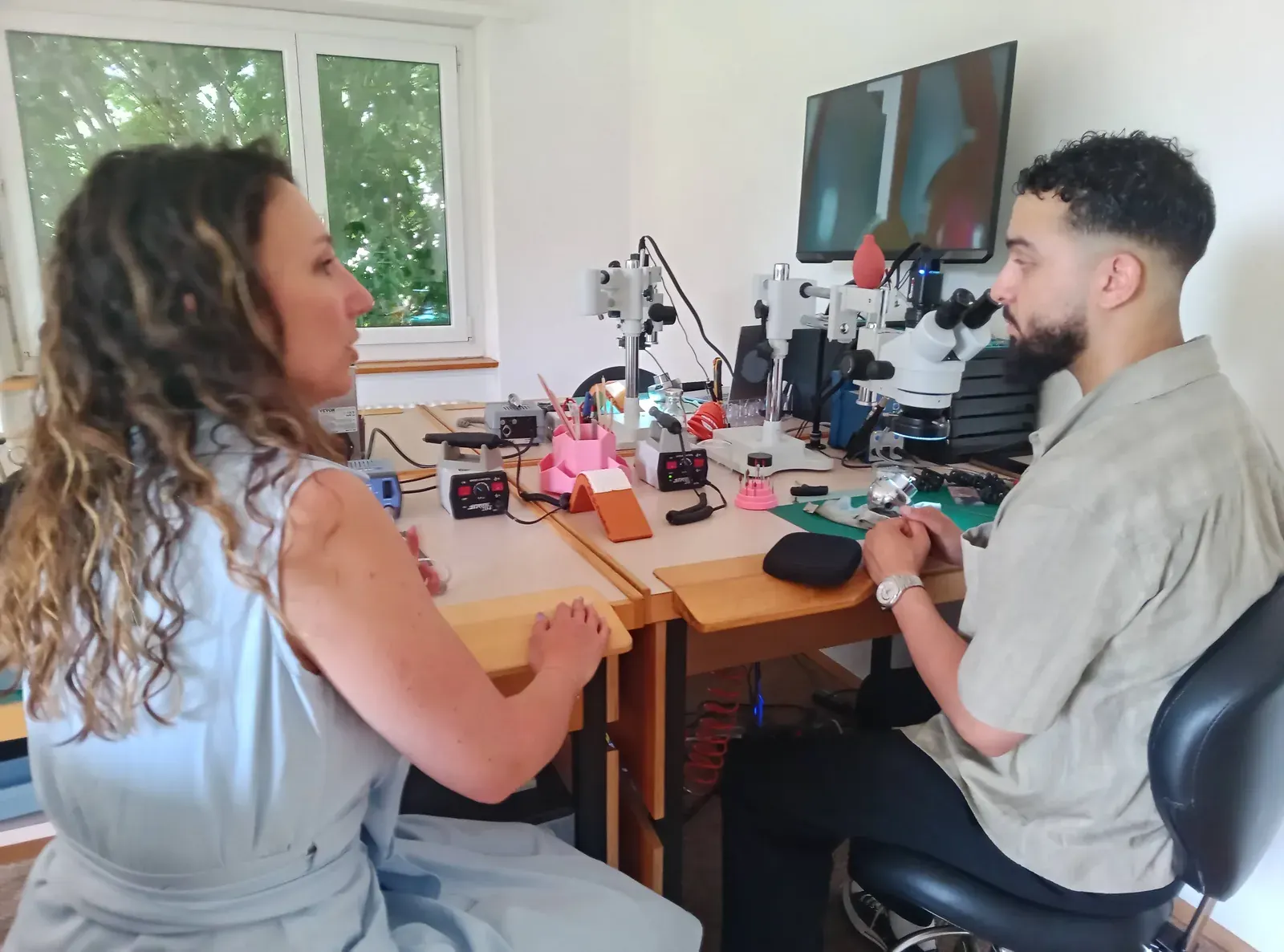
  • Tools, reference points and working environment
Bench setup, tools and workshop environment
03 · Real watch components

Starting from the real component.

Learning is grounded in real components so that shapes, surfaces and areas for reworking can be read under real conditions.

  • Real components and concrete supports
  • Reading surfaces and volumes
Real watch component used during the training
04 · Fundamental gestures

Stabilising the basics before anything else.

Straight graining and satin finishing form the foundation. Regularity comes first, before the more difficult anglage work.

  • Straight graining with a cabron
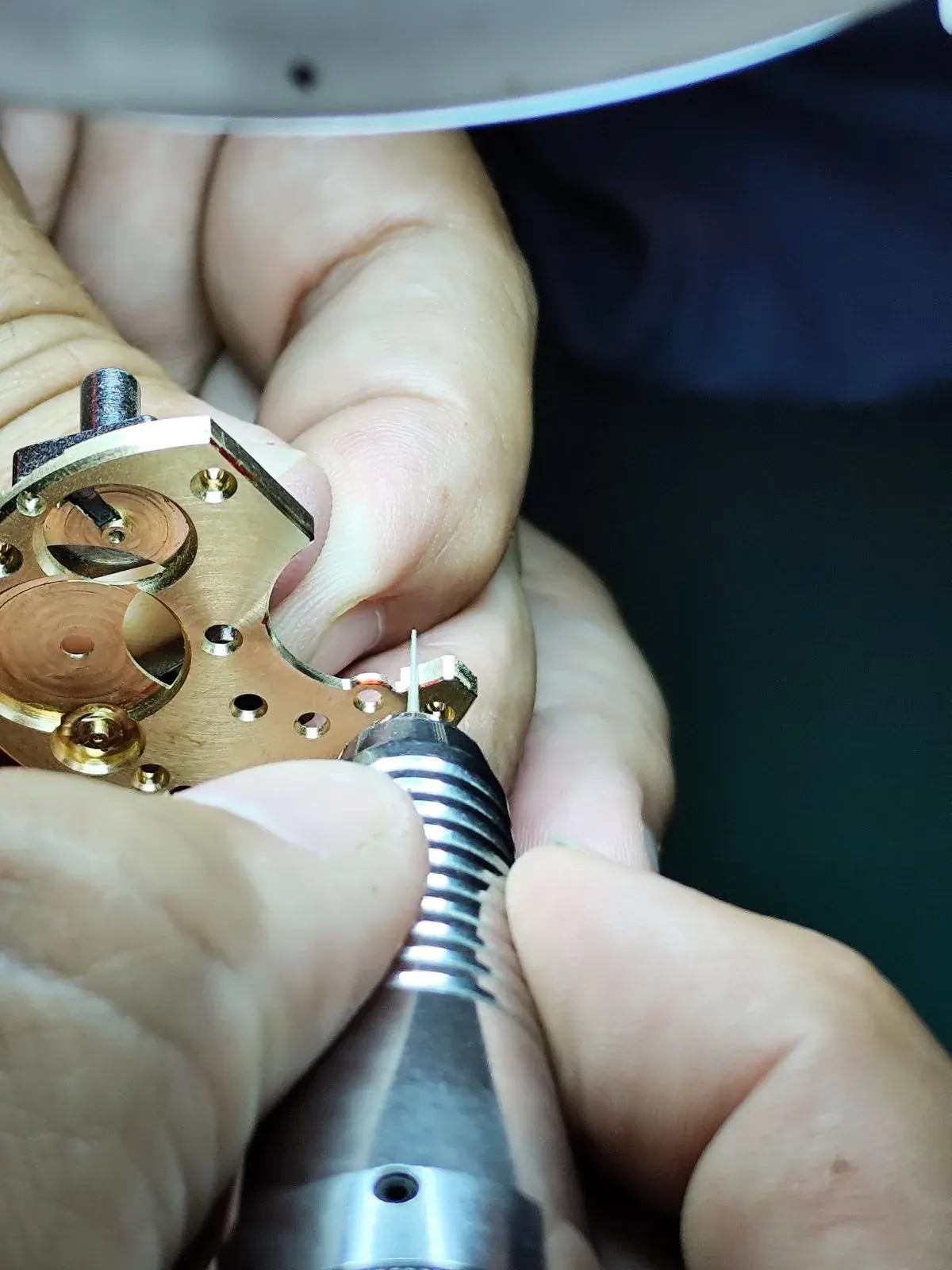
  • Satin finishing and straight graining with a micromotor
Satin finishing with a micromotor during training
05 · Anglage and difficult areas

Approaching the real difficulties.

Hand anglage, micromotor anglage, inward angles and outward angles all demand more precision, clearer reading and firmer control.

  • Hand anglage and micromotor anglage
  • Inward angles and outward angles
An inward angle being worked on by a student during training
06 · Correction and autonomy

See, rework, inspect.

The final objective is to identify a defect, rework it, inspect the component and grow in autonomy.

  • Reworking, cleaning and inspection
  • A more accurate presentation of the work
Final presentation of a component after work, cleaning and inspection
Compare the formats

Three formats. Three entry points.

The comparison is there to help you decide quickly. The detailed sections then confirm the choice.

Format Mainly used for Starting point Logical choice
8h
CHF 600
Entering the workshop seriously and seeing what the work truly requires. Beginner, curious profile, or someone cautious before committing to a longer format. To determine whether 40h or 100h is right.
40h
CHF 4 000
Resuming, correcting and stabilising a practice that is already under way. Existing foundations, a partial command of the gesture, or a practice that needs bringing back into line. Targeted refresher.
100h
CHF 8 000
Building a broader foundation with more time, repetition and structure. Motivated beginner, career change, or a need for a more complete framework. A broader, more progressive foundation.

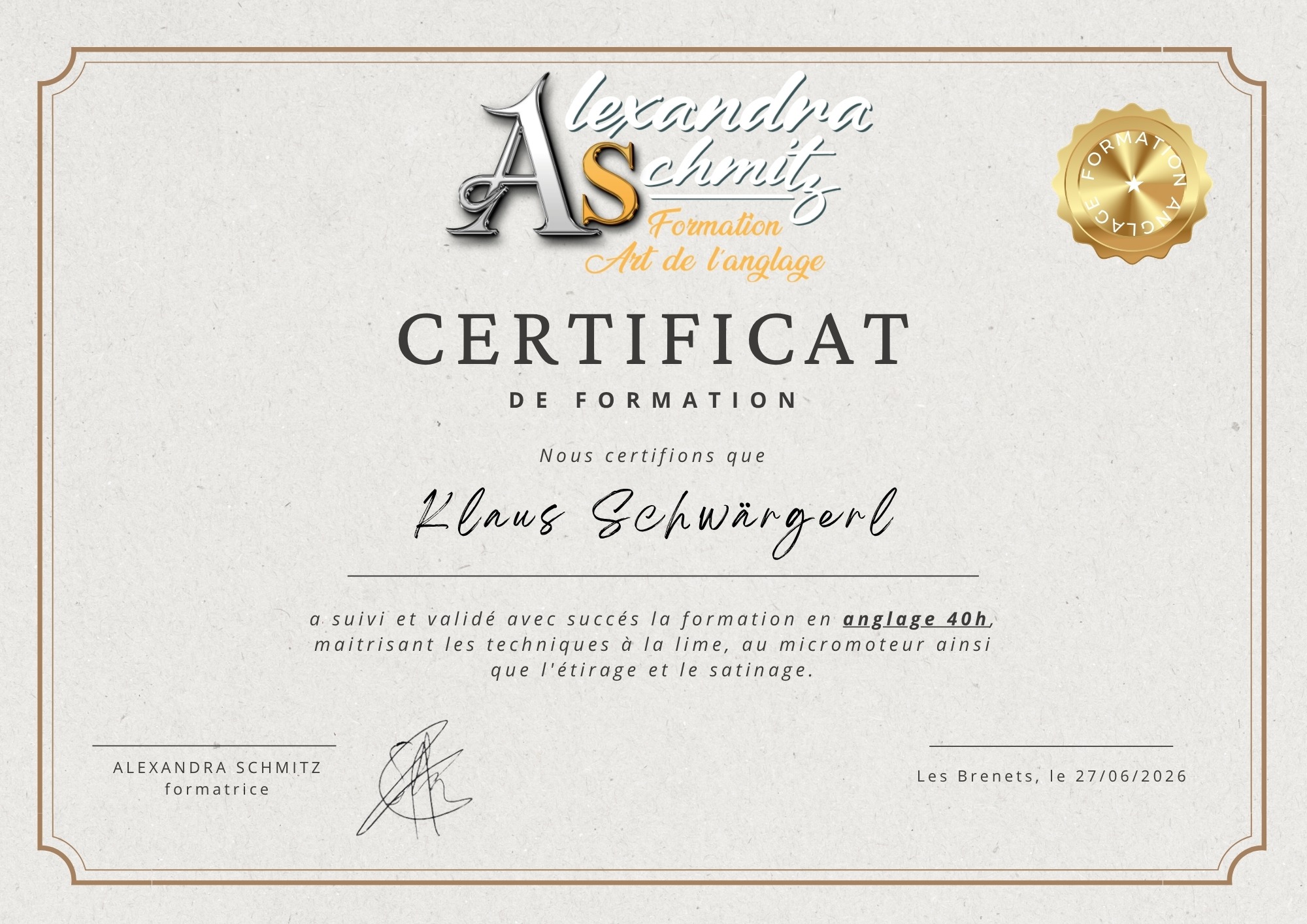
40h and 100h: these two formats aim at a beginner level for joining a manufacture and give access to a photo portfolio, an Art de l’Anglage certificate and a letter of recommendation.

8h: the 8h discovery day is reimbursed if a 100h is then booked.

This format is right if…

You want to enter the real conditions of the workshop, understand the framework, and check whether a 40h or 100h continuation truly makes sense for you.

It is not the right entry point if your need is already a real refresher or a more complete foundation.

What this day should give you

  • A concrete view of the bench, the tools and the level expected.
  • Initial reference points for gesture, organisation and reading.
  • A clearer decision: stop there, move to 40h, or build more broadly in 100h.

The role of the 8h

The 8h is not there to skim over the workshop. It is there to enter it seriously, without vagueness, before deciding what comes next.

This format is right if…

You already have foundations, a gesture under way, or a practice that needs to be brought back into line so that it regains consistency.

It is not the right entry point for a simple first contact, nor for someone whose main need is to build from the beginning.

What the 40h should allow you to do

  • Resume angles, straight graining, satin finishing, reworking and inspection in a useful continuity.
  • See defects more clearly and correct them more cleanly.
  • Make the finishing more legible, more regular and more reliable.

The difference from the 100h

The 40h moves more quickly towards bringing a practice back into line. The 100h leaves more time to build a broader foundation. The choice therefore depends on the starting point, not on any prestige hierarchy.

This format is right if…

You are starting out, changing careers, or need a longer framework to install the right habits without skipping steps.

It is not the right entry point if you simply want to discover the workshop, or if your need is mainly a targeted refresher.

What the 100h should allow you to do

  • Build the foundations with more time, more repetition and greater depth.
  • Establish a more complete working logic, from the bench to final inspection.
  • Progress within a more structuring framework, without artificially accelerating the steps.

For some profiles, an extension with BeWatchmaker may then make sense. It remains a distinct continuation, not a mandatory step.

The difference from the 40h

The 100h builds more broadly. The 40h corrects more directly. They answer different needs, while maintaining the same standard of work.

Frequently asked questions

The essentials for choosing clearly

Four answers to avoid choosing the wrong format.

Is it accessible to a true beginner?

Yes. The 8h allows you to discover the workshop seriously. The 100h also suits a motivated beginner or a career change that needs more structure.

How do I choose between 8h, 40h and 100h?

The 8h is there to discover the real conditions of the workshop. The 40h is there to resume a practice that is already under way. The 100h is there to build more broadly. The choice depends above all on the starting point.

What do the 40h and 100h training formats include?

The 40h and 100h formats aim at a beginner level for joining a manufacture. They give access to a photo portfolio, an Art de l’Anglage certificate and a letter of recommendation.

What is the conversation before booking for?

It is there to identify your starting point, validate the right format and avoid choosing the wrong framework. The idea is not to push towards the longest option, but towards the most accurate one.

Choosing accurately

The right format is not the longest one. It is the one that matches your starting point.

The conversation is there to identify your need and calmly validate 8h, 40h or 100h. If your choice is already made, you can go straight to booking.

“I would rather guide someone towards the right format than towards the longest one.” Alexandra Schmitz

Already know? Go to bookings.