Watchmaking anglage training workshop · Alexandra Schmitz · Les Brenets, Switzerland

Watchmaking anglage training in Les Brenets, Switzerland.

What if true luxury were having gold in your hands?

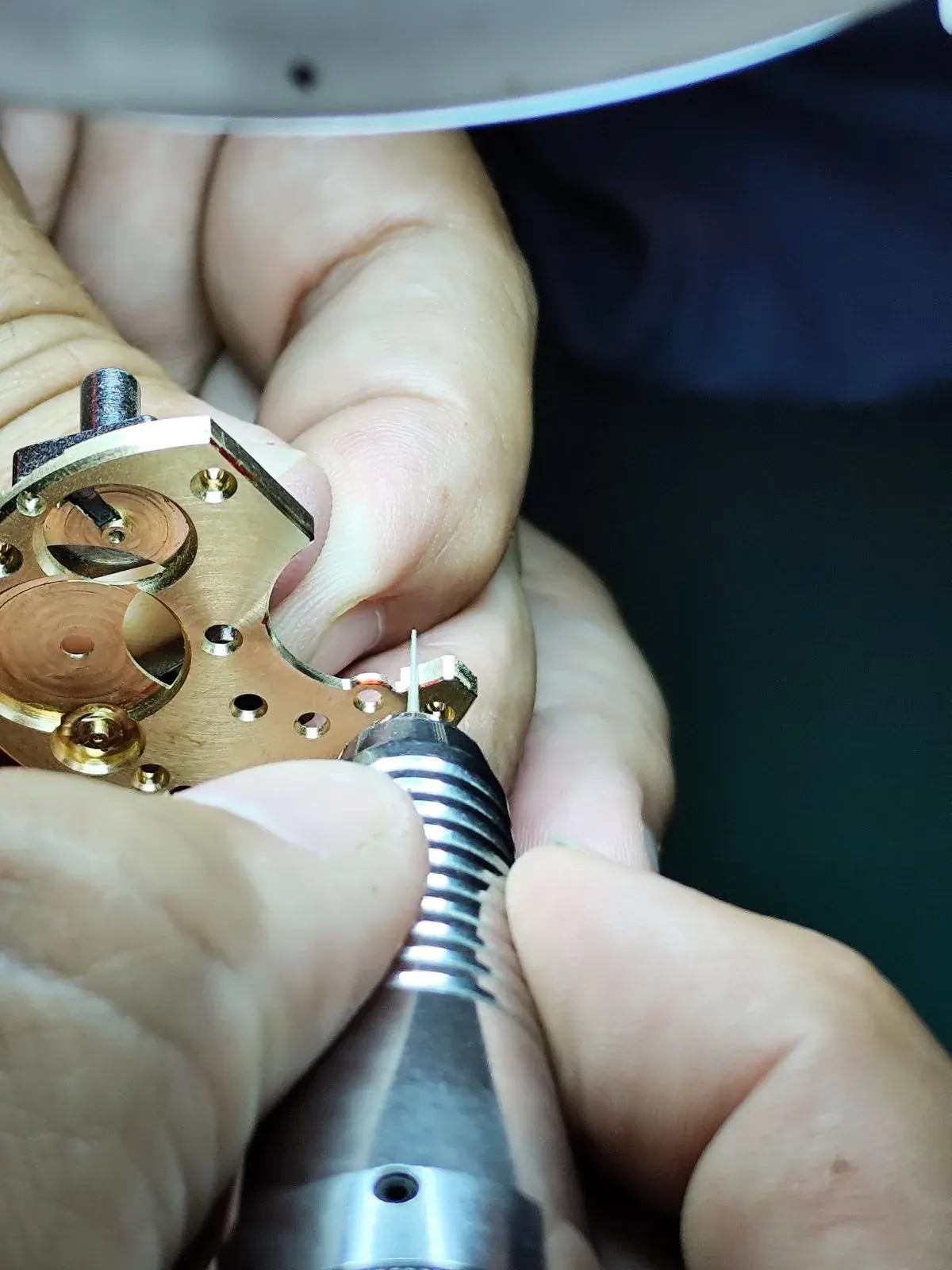
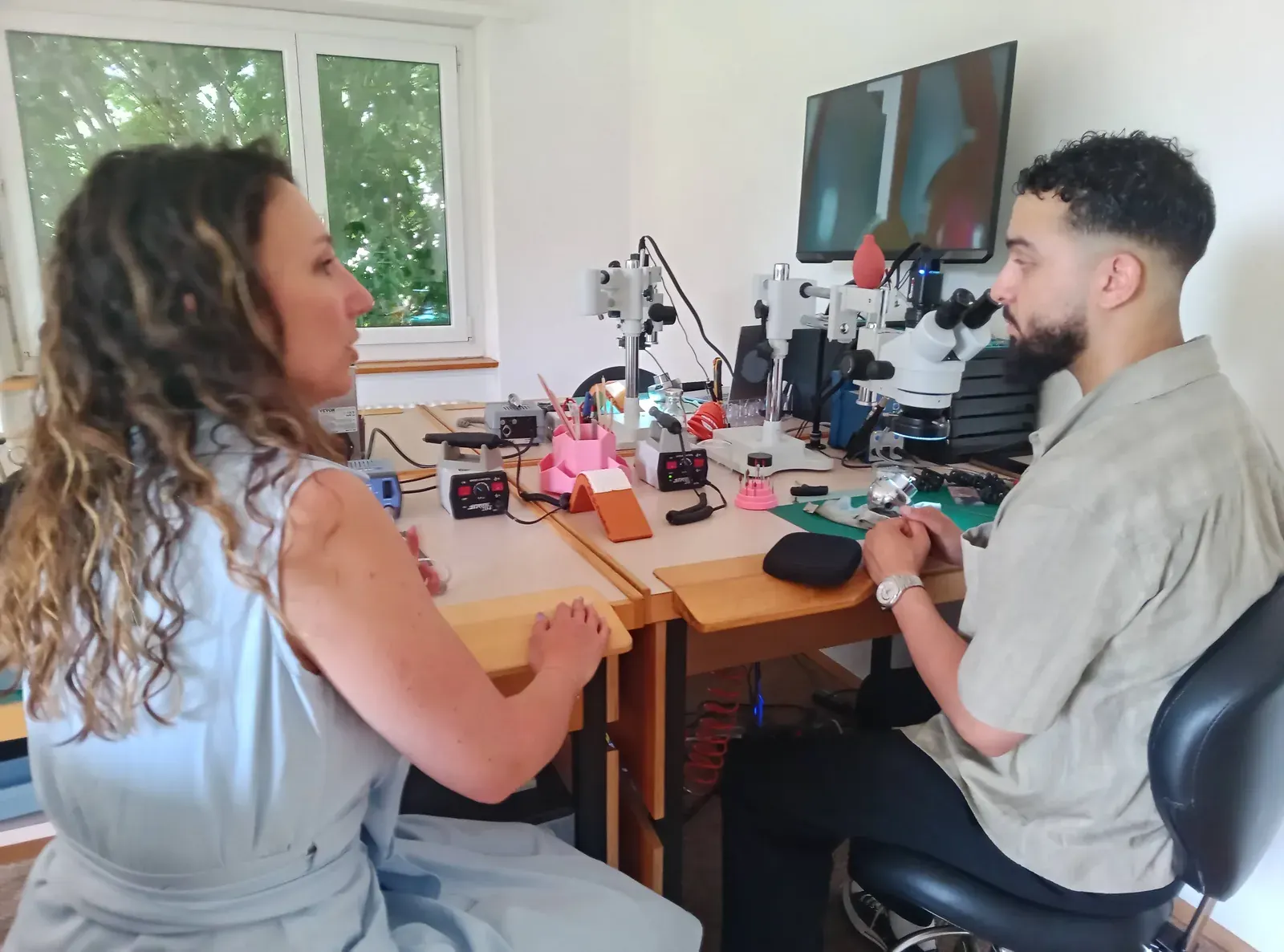
Art de l’Anglage is a watchmaking anglage training workshop where you first learn to see, then to do. In Les Brenets, in small groups, you work on anglage in watchmaking on real components, through demanding teaching led by Alexandra Schmitz.

Setting
4 places

So that each student benefits from precise guidance, without diluted attention.

Materials
Real components

You work on vintage or contemporary watch components, not on a simplified case.

Vision
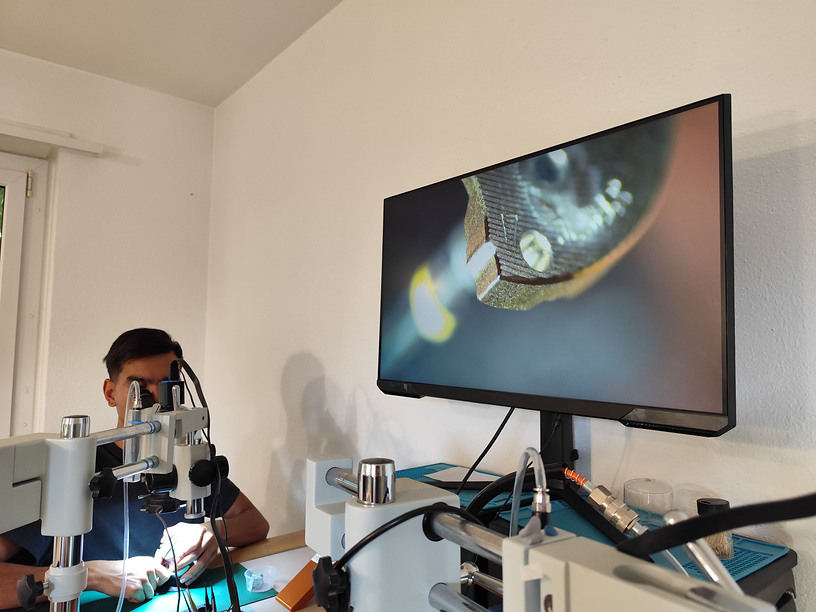
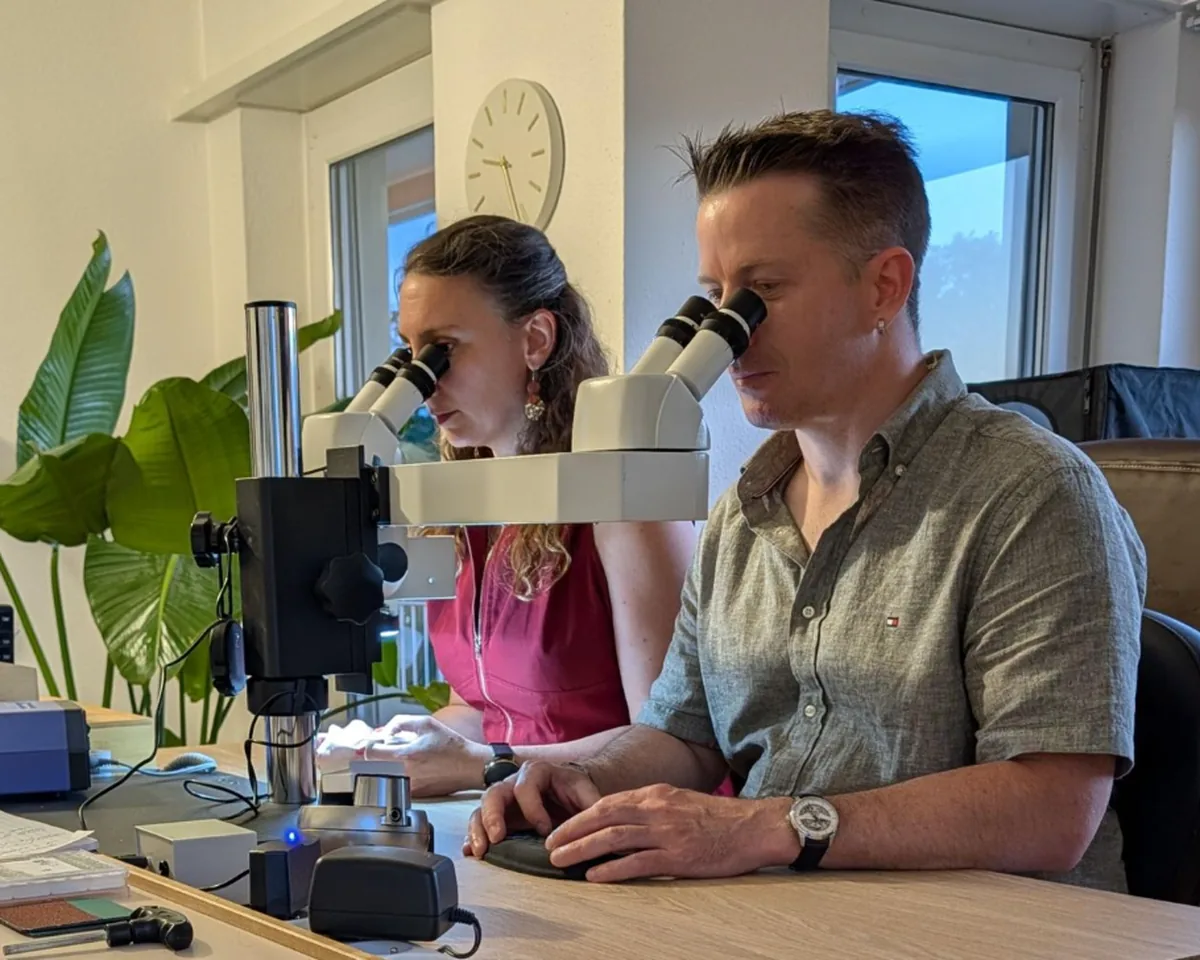
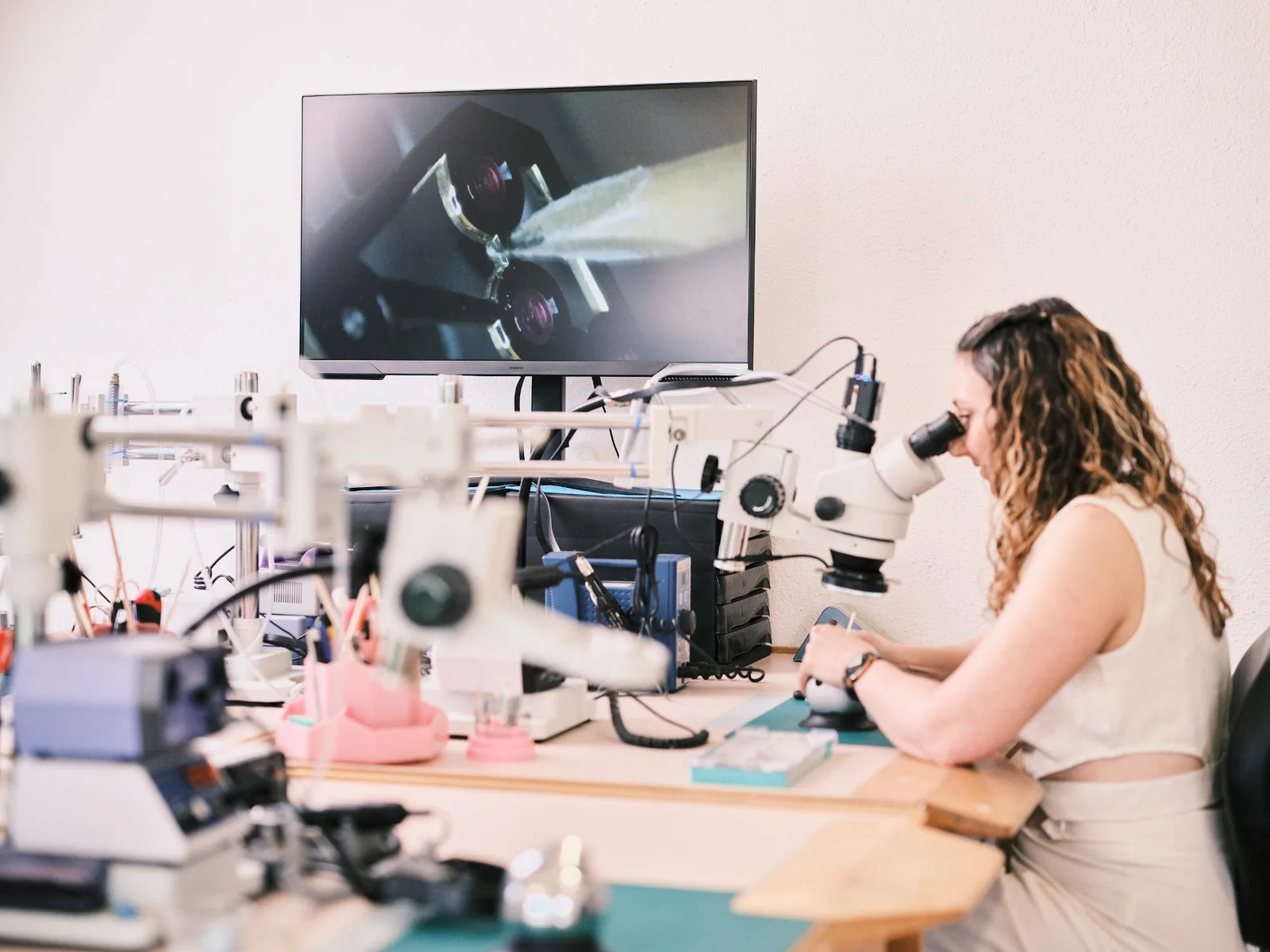
Microscope + 4K

This setup makes it possible to see immediately what needs reworking and to correct at the right moment.

Real practice
Subcontracting

Alexandra keeps a production practice in order to remain in direct contact with the real demands of the trade.

Reading the light

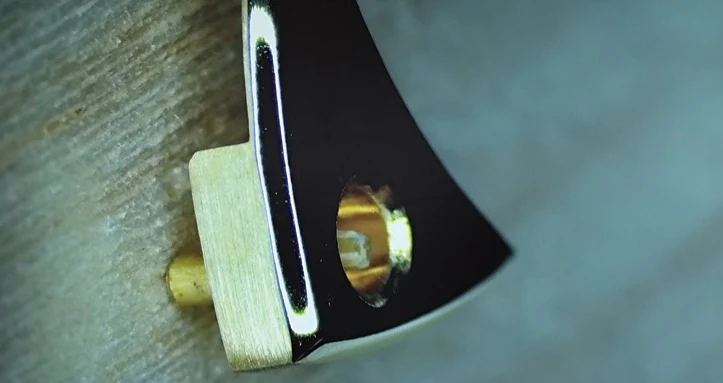
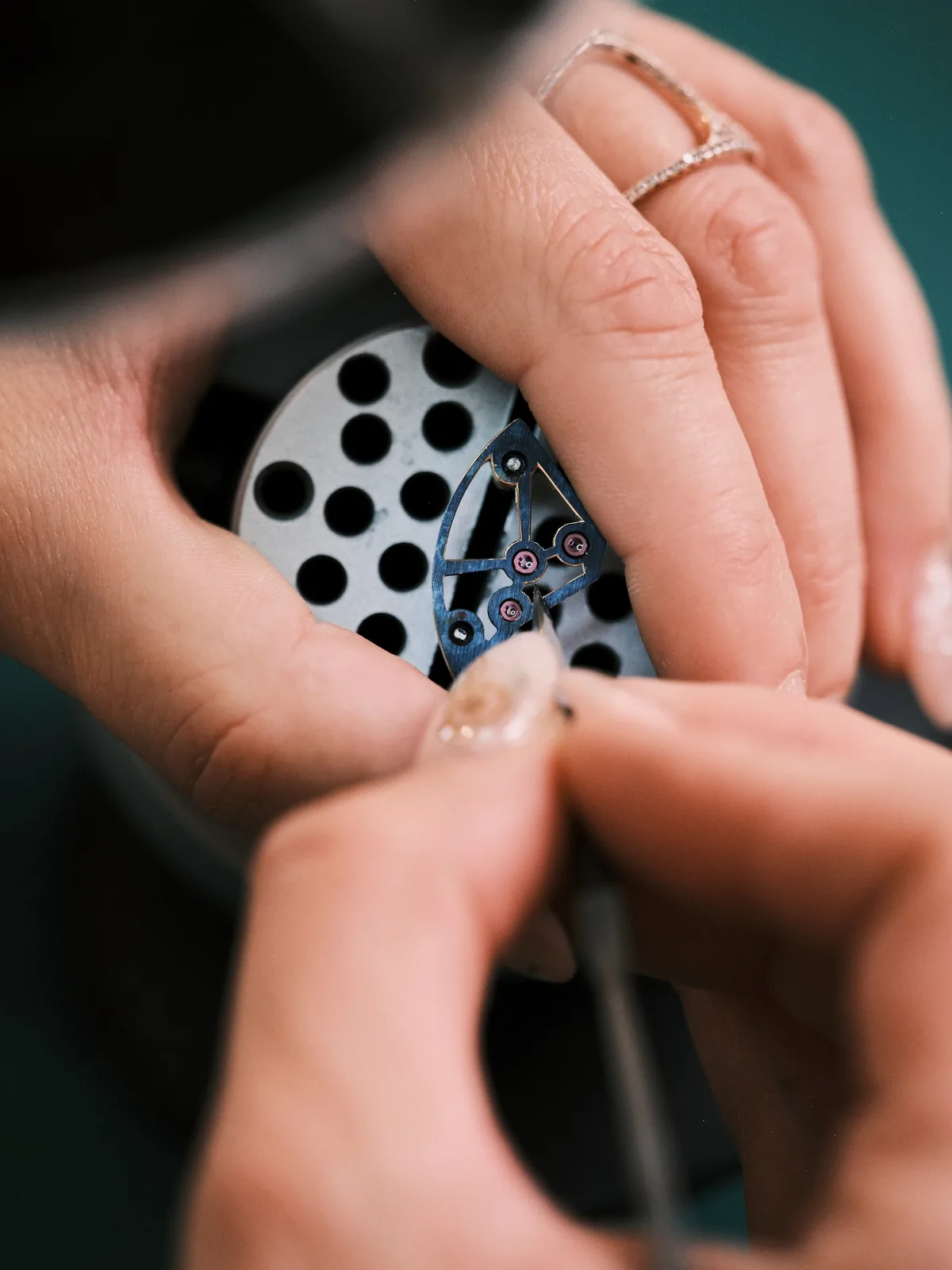
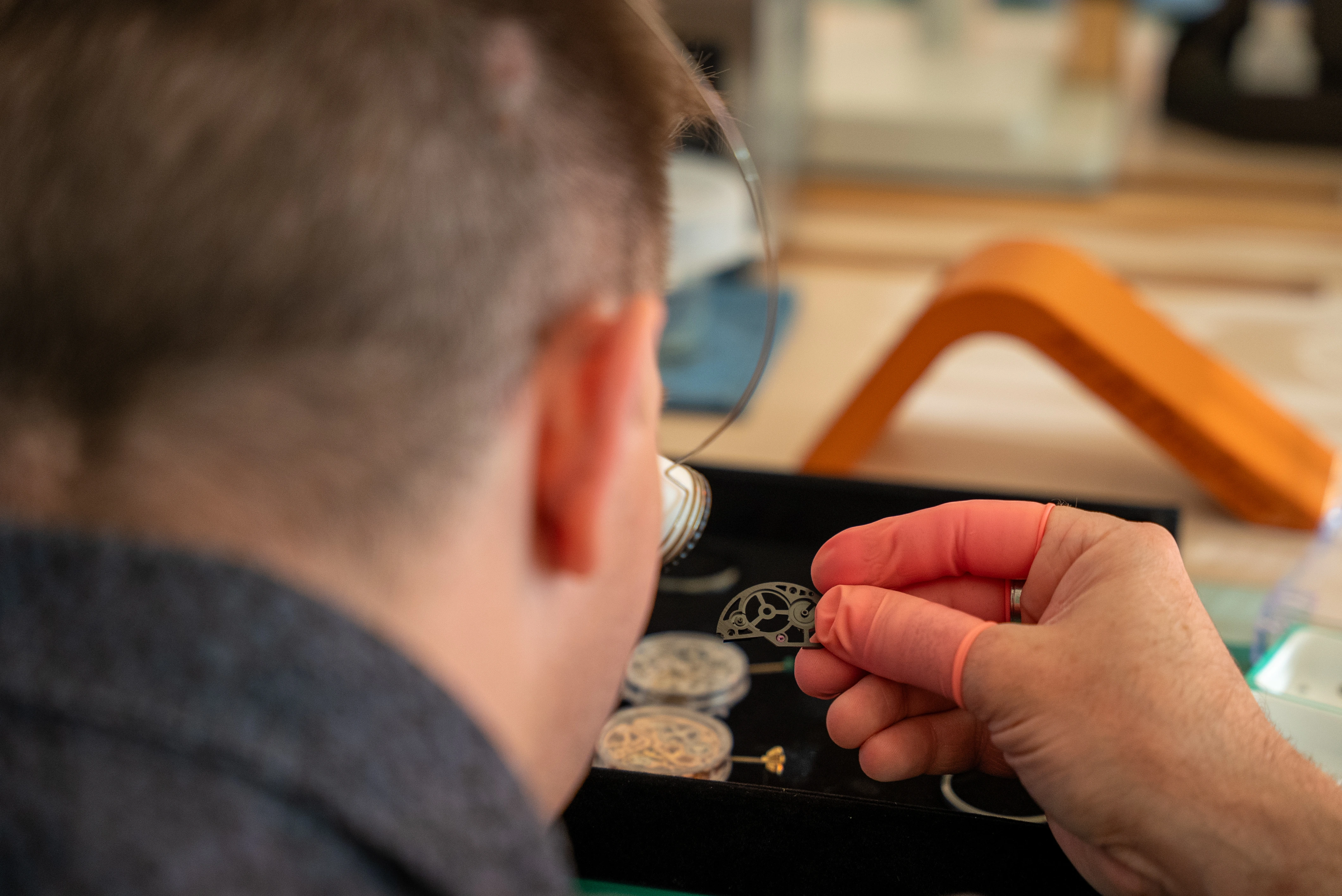
Watchmaking anglage training begins here: learning to read the light.

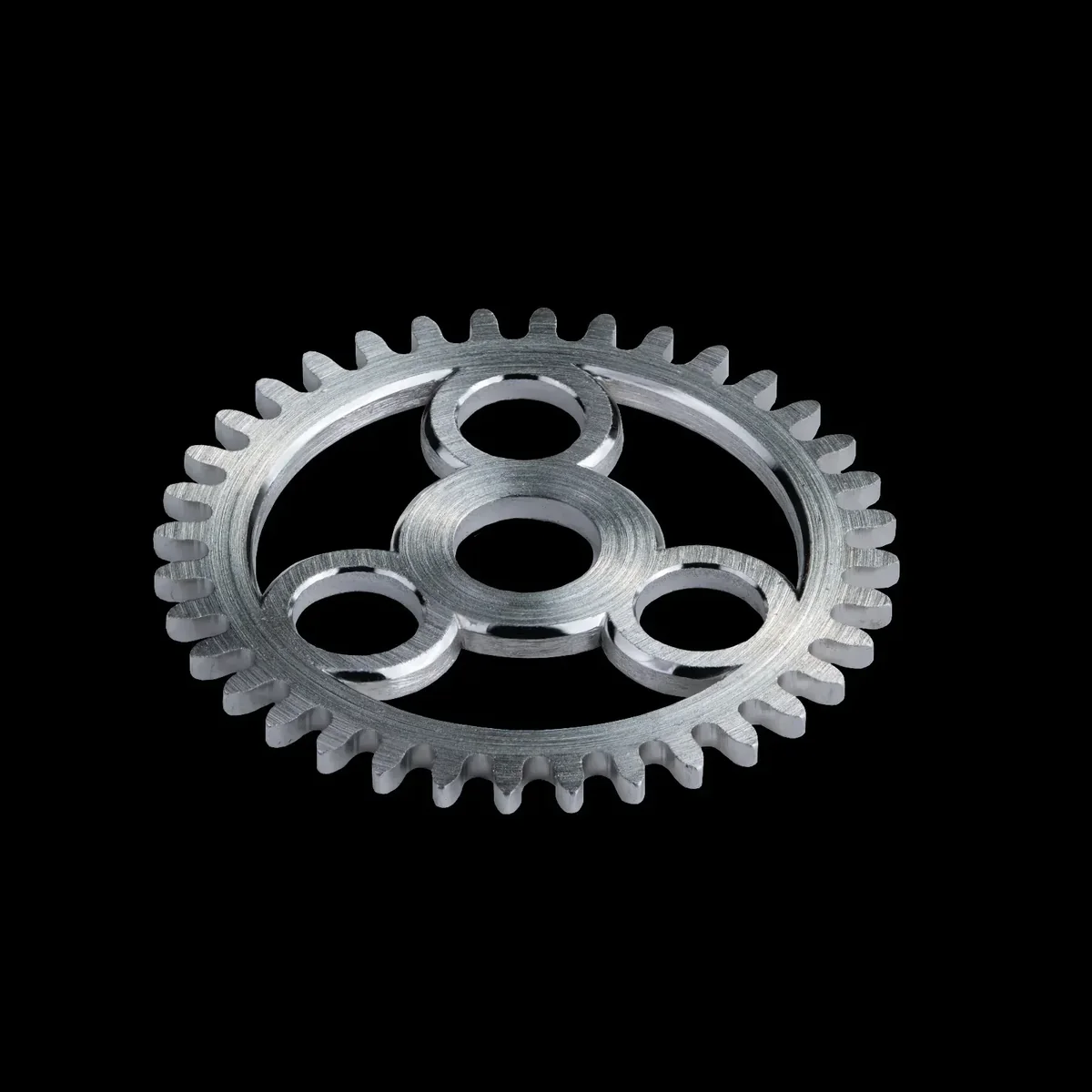
In watchmaking anglage, a reflection tells you very quickly whether the line holds or whether the component needs to be reworked. This wheel was fully beveled by Alexandra and then photographed by a professional photographer.

Angle, width, geometry, reflection: here, light is the judge. To extend this way of reading detail, you can read the Workshop Journal.

On desktop, markers and cards activate on hover, focus, or click. On mobile, activate the loupe and drag to explore.

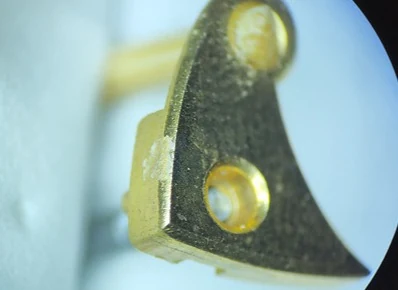
Watchmaking anglage macro showing how to read reflections and the stability of an edge
Interactive markers to read a component. The markers disappear when the loupe is activated, then return when you exit.

Click a marker to read it. Enter the loupe to give full space to the detail.

01

Clean edge

A clear transition, without softness or burrs.

02

Even width

If the width drifts, the gesture drifts with it.

03

Coherent geometry

Curves, angles, and rework must answer one another.

04

Stable reflection

When the reflection breaks, the component needs to be reworked.

Useful teaching

Watchmaking anglage training that connects observation, correction, and gesture.

The first correction concerns reading the light. If the reflection breaks, Alexandra shows you immediately where to look and what needs to be reworked. You then return to the bench with a precise point to hold, not with a vague instruction.

With the microscope connected to the 4K camera, demonstration, correction, and reworking remain linked. You lose less time in uncertainty, and more time is given to the right gesture.

01

See precisely

The defect becomes readable the moment it appears.

02

Correct from a clear point

The reworking focuses on an identified area, not on a general impression.

03

Return to the bench

The hand resumes while the eye keeps the right reference.

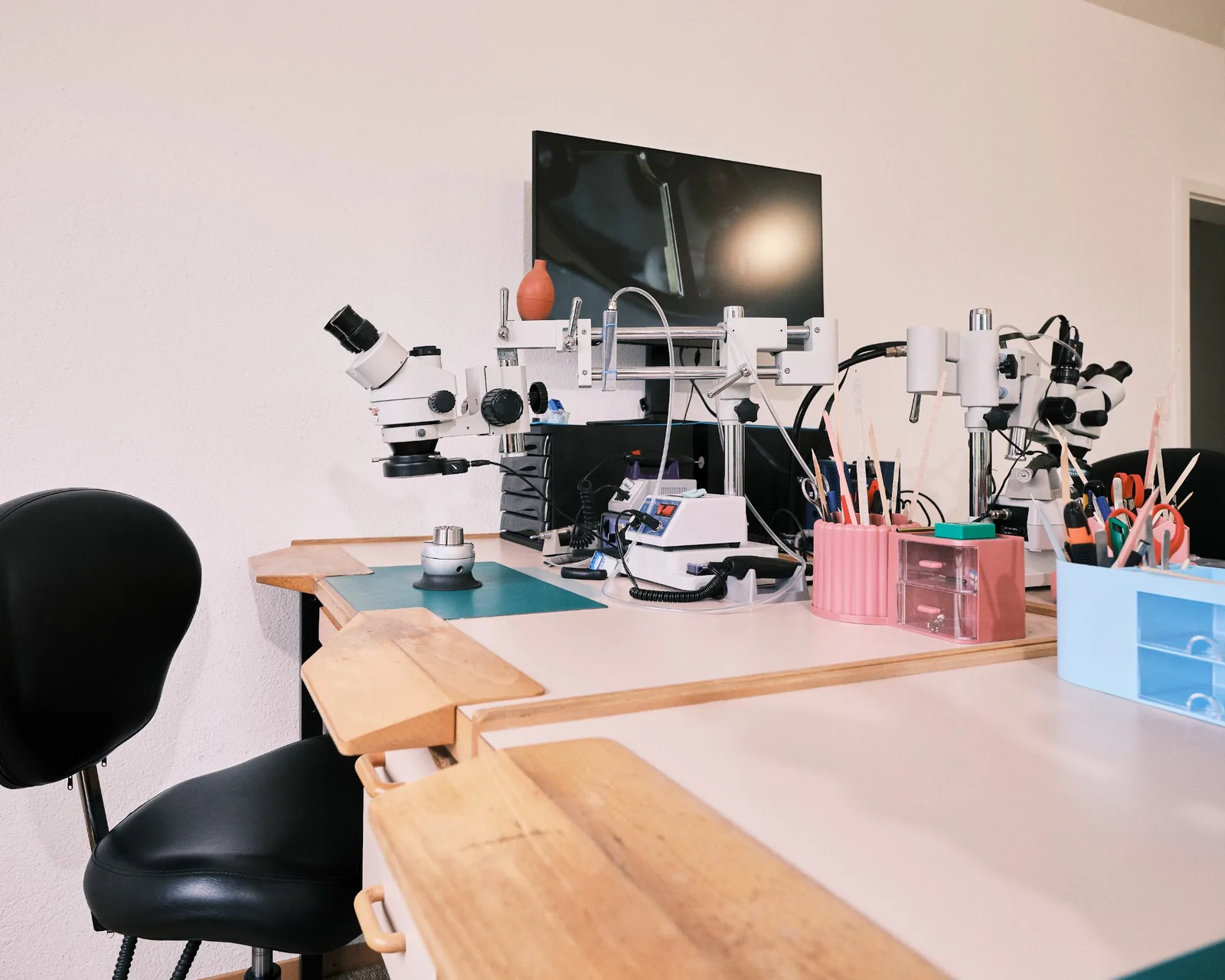
Watchmaking anglage training workstation with microscope and precision tools
Real watch components

You progress on components that force you to read the reality of the trade.

To learn anglage in watchmaking, bridges, wheels, and vintage or contemporary components serve as the basis for learning. Materials, geometries, and surface states are not simulated: your eye and your hand work in conditions close to those of the trade.

Varied materials Steel, brass, German silver: the hand learns from real material behaviour.
Different periods Vintage and contemporary pieces do not call for the same reading.
Grounded in the trade The finishing remains tied to watchmaking, not to an abstract exercise.
Two settings

You do not need the same framework depending on your starting point.

The homepage helps you place yourself. To go further, the Training page details the formats, and the Companies page clarifies the dedicated framework for workshops and manufactures.

Individuals · enthusiasts · career changes

A framework to discover, revisit, or build a serious foundation.

Depending on your starting point, you do not need the same level of commitment. The 8h, 40h, and 100h correspond to three levels of work, without lowering either the demand of the eye or that of the gesture.

  • 8h Enter the workshop and understand what anglage truly requires.
  • 40h Rework a gesture, stabilise a reflection, gain consistency.
  • 100h Build a coherent foundation to go further.
Professionals · workshops · manufactures

Separate support for teams and workshops.

Here, the challenge is to align a level, pass on a working method, and intervene within a framework that serves production, either on site or in Les Brenets.

  • Staff training Raising skill level and harmonising working practices.
  • Work on your components Learning as close as possible to your workshop realities.
  • Workshop setup Organisation, tools, ergonomics, standards.
Training formats

Choosing the right watchmaking anglage training format.

The right choice mainly depends on your starting point, the time you have available, and the depth of work you are looking for. The dedicated page then lets you compare the framework, content, and rhythm clearly.

8h

Discover the workshop

A first serious immersion to understand the setting, the tools, and the expected level.

40h

Advance

To rework a gesture already underway, stabilise work quality, and gain consistency.

100h

Build a complete foundation

To begin seriously or support a broader career change.

Alexandra Schmitz in her watchmaking anglage training workshop in Les Brenets
Alexandra Schmitz

A method held by Alexandra Schmitz, in direct contact with reality.

Alexandra teaches the way she works: starting from the component, the eye, and a level that can genuinely be defended. She does not only correct a result; she helps you read more accurately, control pressure better, guide the trajectory, handle reworking, and stabilise the reflection.

“My role is to help you see, then to correct without detour, until the gesture truly holds.”

She keeps part of her time for high-end subcontracting, working with watch brands and independent watchmakers. This continuity between transmission and production keeps the workshop in touch with demanding components and real standards.

Since 2006, that practice has fed a teaching approach that is sober, direct, and credible. To understand in more detail the path that shaped this way of teaching, you can discover Alexandra Schmitz’s journey.

A calm setting. Clear standards. A level you can defend at the bench.

Testimonials

What students and professionals retain.

Always the same markers: clear standards, real progress, and the seriousness of the workshop.

“I made enormous progress in the consistency of my gestures, in reading the light, and in the precision of the edges. Your teaching and your standards gave meaning to every detail of the trade.”
Elouan Dehet Student — 40-hour Advanced training
“Alexandra collaborated with me on several anglage projects. Her precision, seriousness, and attention to detail are remarkable.”
Fabio Lopez Watchmaking angleur
Frequently asked questions

The two useful points to know from the outset.

The essentials for understanding the framework of this watchmaking anglage training, without weighing the page down.

Is watchmaking anglage training accessible to a beginner?

Yes. The 8-hour format offers a first serious immersion in the workshop. The 100-hour format can also suit a structured start or a career change.

Do you work on real components in watchmaking anglage?

Yes. The workshop works on real watch bridges, wheels, and components, both vintage and contemporary, so that learning is grounded in the materials, geometries, and surface finishes of the trade.